
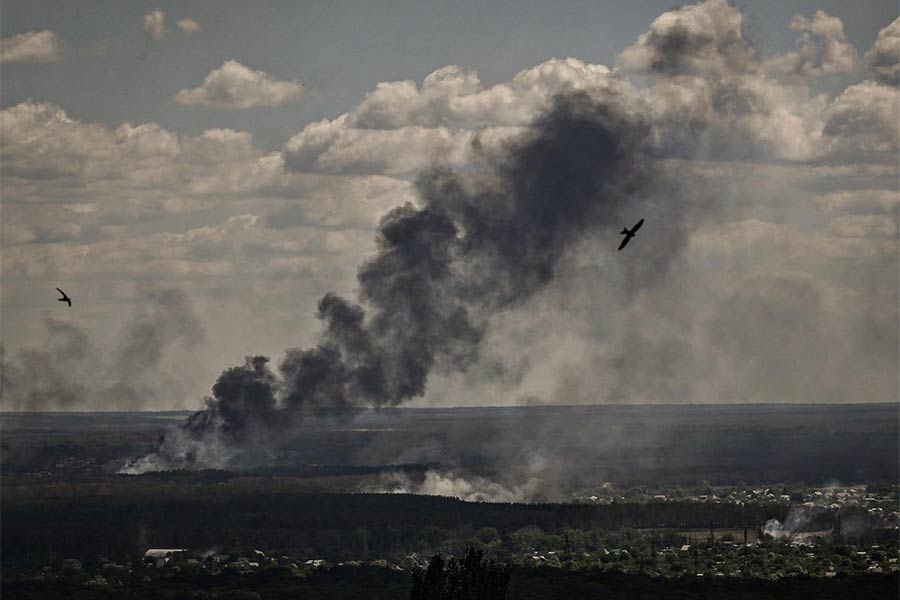
The fourth anniversary of the start of the full-scale war is approaching, and during this time, not only Ukrainian cities, industry, and human lives have suffered irreparable damage, but also the environment. To understand the scale of this impact on the environment, since February 24, 2022, Ecoaction has been monitoring cases of potential environmental damage caused by Russian aggression. And the recorded data is discouraging.
Since the initiative began, the Ecoaction volunteer team has documented 2,599 cases of potential harm, and this number continues to grow every day. All cases were documented based on media reports and official government statements. The Ministry of Economy, Environment, and Agriculture of Ukraine has already estimated the war-related damages at 6.385 trillion UAH on its official “EcoZagroza” website.
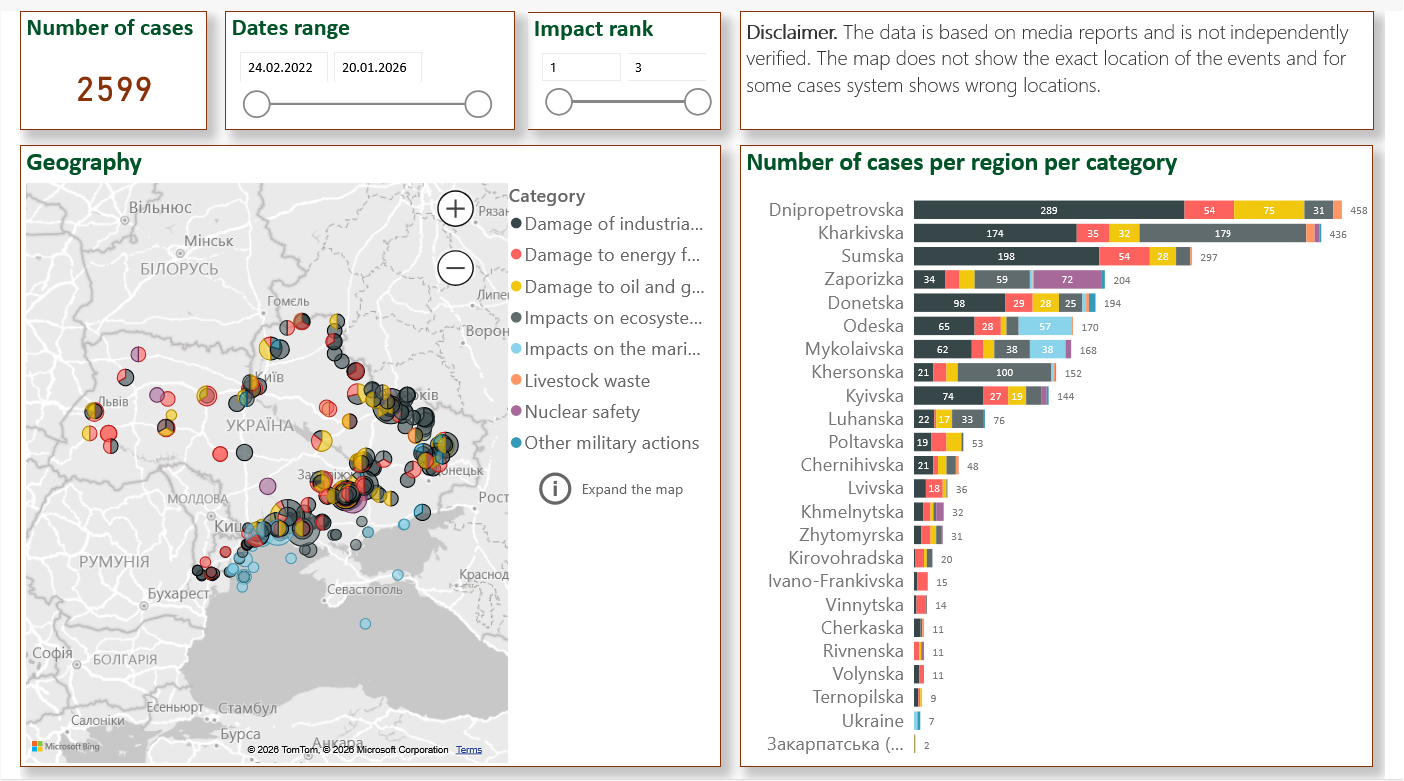
An interactive map of potential environmental damage caused by Russian aggression, created by the non-governmental organization “Ecoaction”
Nuclear power plants, seaports, and hazardous waste storage facilities — ranging from mineral fertilizers to paints and coatings — as well as chemical and metallurgical plants are frequently targeted. Numerous fires have been reported at oil depots, gas stations, and landfills, along with damage to water supply and wastewater treatment facilities. In addition to man-made threats, the war is having a direct destructive impact on Ukraine’s natural reserves, destroying rare species and habitats in forests, steppes, and marine areas.
The sheer variety of damage is striking, which is why all incidents on Ecoaction’s interactive map are divided into key categories: damage to industrial facilities, damage to energy infrastructure, damage to oil and gas facilities, nuclear safety, livestock waste, and impacts on terrestrial and marine ecosystems.
Since the severity of environmental impact varies from case to case, Ecoaction uses a ranking system from 1 to 3. The first rank is assigned to cases where a hazardous facility has been damaged without any direct (at the time of recording) impact on the environment or due to a lack of data. The second rank indicates the presence of significant local damage. The third rank is assigned to cases with confirmed large-scale negative impacts requiring long-term environmental restoration.
Overall, most incidents are concentrated in frontline and border regions, where there is a high concentration of industrial and energy facilities, and this pattern persists regardless of changes in the frontline. At the same time, the highest number of incidents was recorded in Dnipropetrovsk Oblast—456 (17.7% of the total). Among cities, Kharkiv was the hardest hit, with 138 incidents recorded.
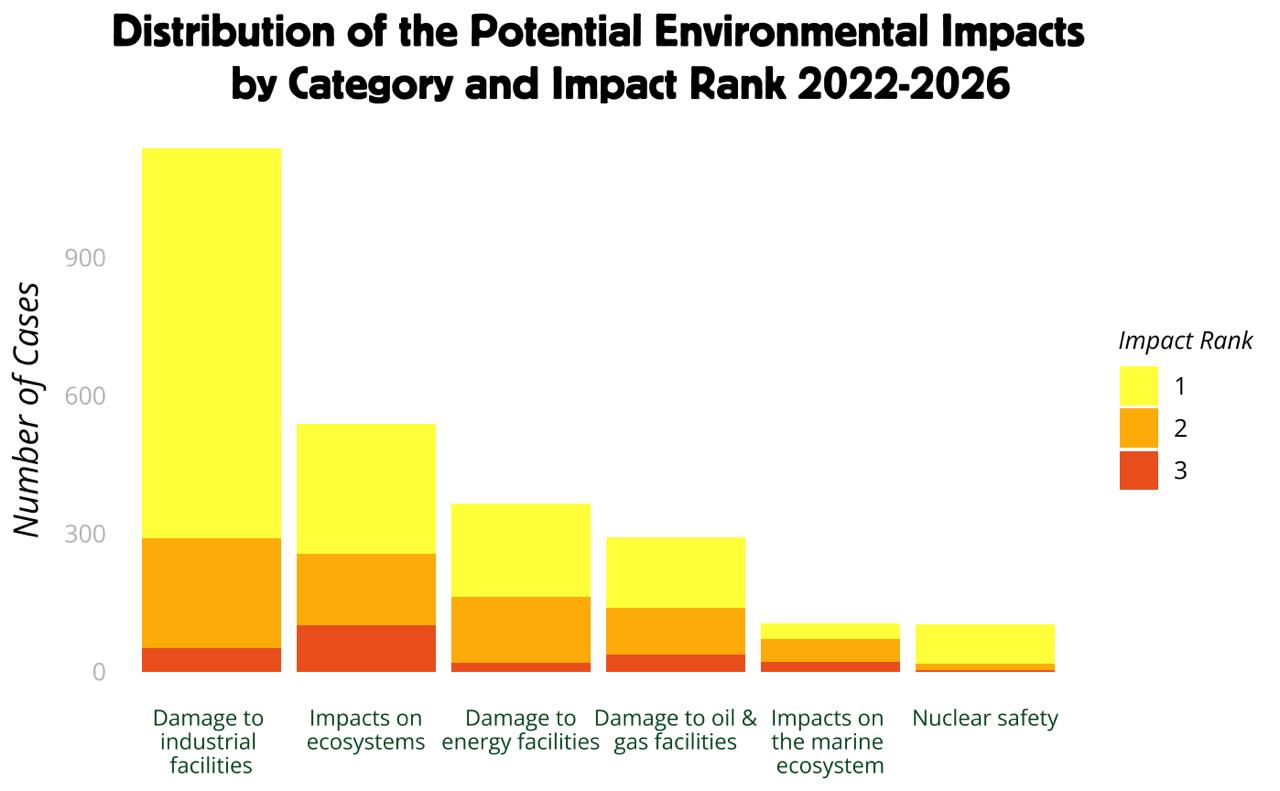
The author of the statistical study is Yelyzaveta Shpak, Ecoaction volunteer.
The category “Damage to industrial facilities” accounts for the largest share of these statistics — 44.2%, or 1,137 incidents — reflecting Russia’s targeted focus on the Ukrainian industrial sector.
An analysis by severity level shows that although the vast majority of incidents (1,623 cases, or 63.2%) fall into the first severity level, this does not diminish the actual long-term risks. The most dangerous cases, those in the third rank, account for 9.2% (237 incidents), and they have the most devastating impact on the environment and human health in the short and long term.
To get a clear picture of what these incidents entail, here are a few examples. On June 4, 2025, a bioethanol plant in the Sumy region was severely damaged by Russian UAV strikes, and substance from nine tanks spilled onto nearby farms. On October 3, 13,000 head of livestock were killed as a result of a Russian attack in the Kharkiv region. And on December 22, a Russian attack at the Pivdennyi port caused burning of the containers with vegetable oil, with some of the oil spilling into the Black Sea.
It is noteworthy that in the “Impact on ecosystems” category, despite the lower overall number of incidents compared to the industrial sector, third-level incidents predominate.
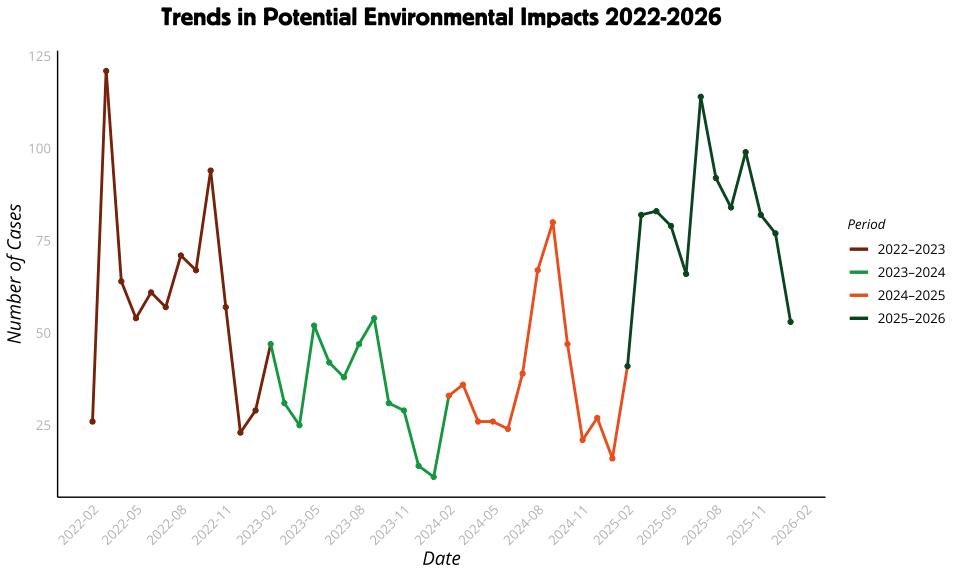
The author of the statistical study is Yelyzaveta Shpak, Ecoaction volunteer. Each year is represented by a different color, with the year beginning in February
The intensity of the impact varies from year to year: 726 cases in 2022, 446 and 442 in the following two years, and a sharp increase to 931 cases in 2025. The increase in the number of cases of potential environmental damage is a direct consequence of the intensification of Russia’s offensive actions and the escalation of terror against civilians, which is why the highest numbers of cases were recorded in March 2022, as well as July and October 2025.
Despite the available data, a complete and definitive assessment of the environmental disaster caused by Russian aggression will only be possible once hostilities have ceased and the areas have been cleared of mines. Ukrainians will feel the consequences of these crimes for decades to come, but documenting each crime now lays the groundwork for holding the aggressor accountable in the future.
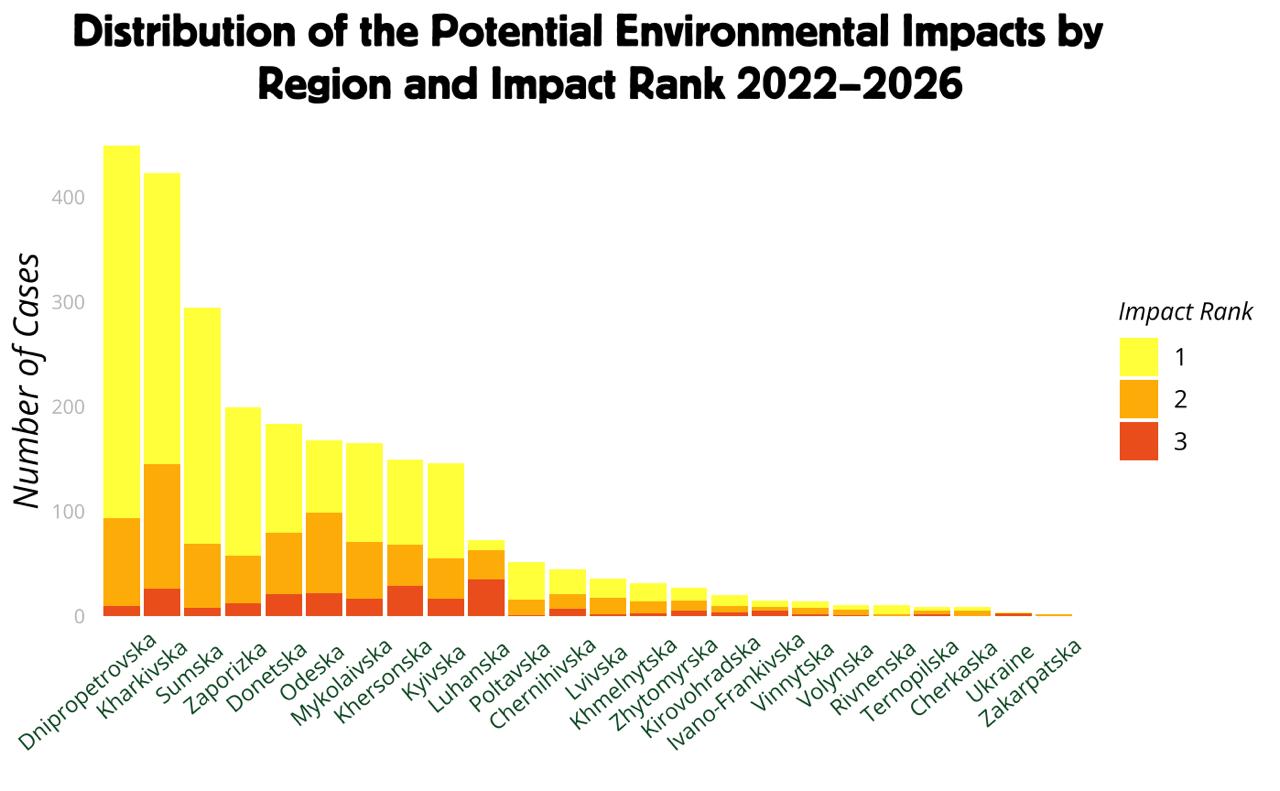
The author of the statistical study is Yelyzaveta Shpak, Ecoaction volunteer. Distribution of cases of potential environmental harm by region
The scale of the impact of Russian aggression on the environment is unprecedented in modern history, so documenting every single case is a way to grasp the full extent of the damage and show the world the full horror of war. At the same time, we must think about post-war environmental restoration, not merely to rebuild what has been destroyed, but to seize the opportunity for a radical “green” transformation of Ukraine in accordance with the highest global standards.
Authors:
Anna Koriahina, ecologist and communications specialist at Ecoaction
Yelyzaveta Shpak, volunteer at Ecoaction
Source: lb.ua
Translated by Ecoaction volunteer Kseniia Khryplyvets