
In autumn 2024, Ecoaction launched a call for project proposals from civil society organisations aimed at biodiversity conservation and restoration. From more than fifty applications, five projects were selected and implemented by the winning organizations by May 2025. The outcomes they managed to achieve are presented below.
Children Supported Wildlife in a Newly Established Eco-Park in Ivano-Frankivsk Region
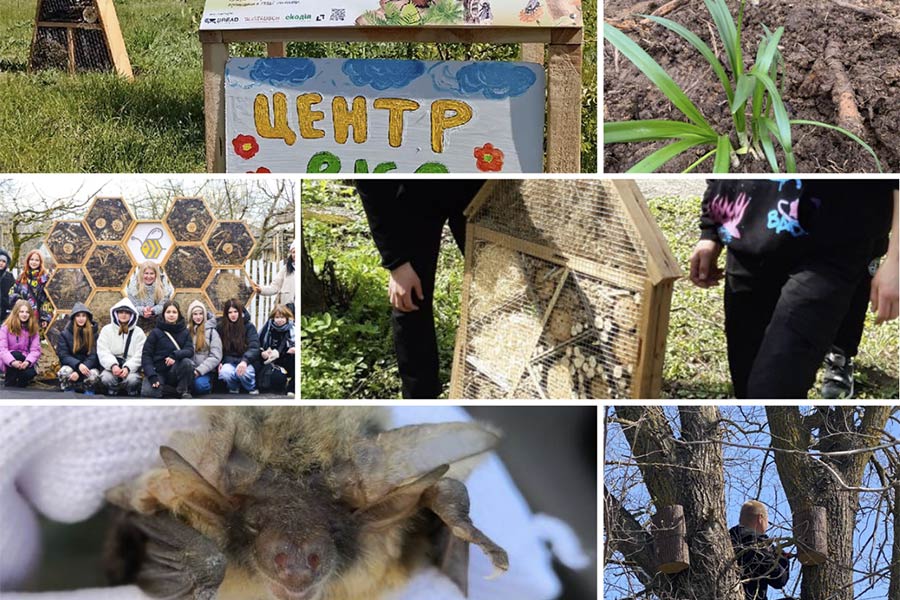
NGO Pokuttya Office for Territorial Development focused on developing the “Lastivka” Eco-Park, created on the site of a neglected public garden in the town of Chernelytsia, Ivano-Frankivsk region. Students of the local lyceum were involved in the activities. Together, they assembled and installed houses for bats, owls, squirrels, hedgehogs, as well as an insect hotel and starling nest boxes. In spring, native plants, trees, and bushes were planted with the participation of the local forestry service.
Environmental education was an important part of the project. The space arrangement was combined with educational lectures on the benefits of bats, the importance of insects for humans, rules for winter bird feeding, and the significance of plant diversity, among other topics. In total, 12 educational sessions were held. An information stand for visitors was installed at the eco-park.
Children continue to take care of the park by refilling feeders, hiding nuts for squirrels, and observing the wildlife inhabiting the constructed shelters. A new inhabitant has already been recorded: a squirrel family has settled in one of the houses. In the future, students are also expected to be involved in research and monitoring activities within the park.
Bees Captivated School Youth in the Kyiv Region
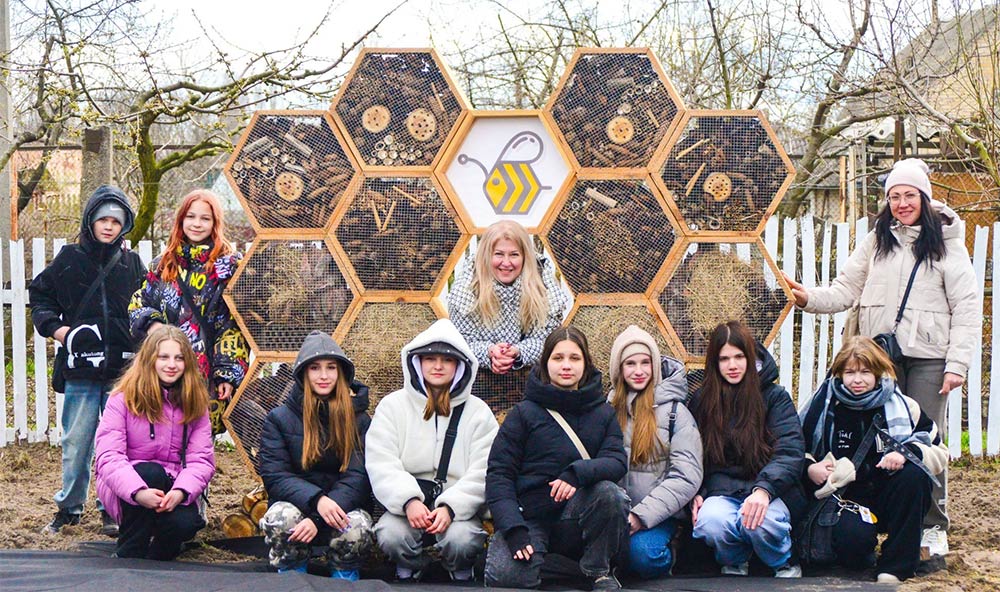
NGO Nova Kalyta, as a part of its project, worked together with students of Kalytianskyi Lyceum to conserve the population of wild mason bee (Osmia). A handmade bee hotel was installed, where the insects can safely overwinter and raise a new generation. Young people of different ages were involved at all stages of the project’s preparation.
Children collected reeds, pine cones, bark, and other components to fill the future bee hotel. They assembled a structure consisting of 15 cells, filled it with natural materials, and installed it on the lyceum grounds. Subsequently, flowering plants were also planted to support osmia bees. Rainwater harvesting systems and drip irrigation were installed for these plants. All activities were combined with educational presentations in schools in Kalyta, Semypolky, and Zavorychi.
In the future, the project is planned to be scaled to other settlements within the community and beyond, as local residents have shown their strong interest. Nova Kalyta has already raised funds to purchase equipment to create new bee hotels with fillers for further distribution to anyone interested through the social school enterprise “Shkilny Vulyk” (School Beehive). New fillers and special tubes containing bee larvae have also been prepared and can be purchased in exchange for a charitable donation. The funds raised will be used for new environmental protection measures.
Living Bird Feeders to Support Birds in the Chernihiv Region
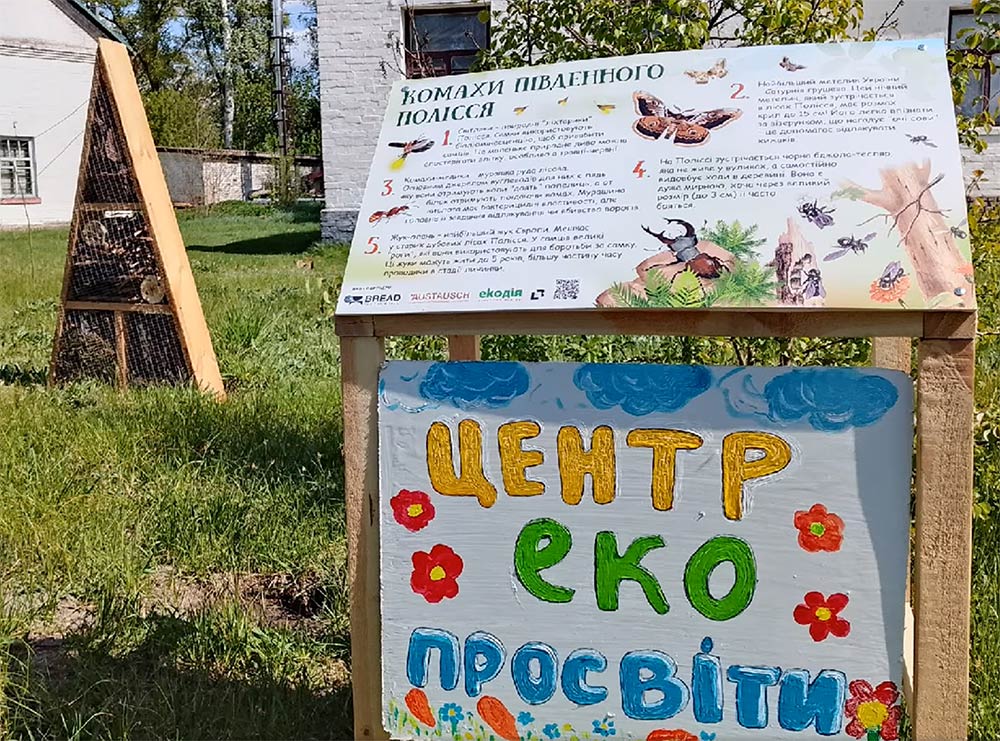
NGO Folk High School “Vovchok” worked on creating a biodiversity space in the village of Vovchok in the Chernihiv region. The project focused on supporting local bird populations. Within the space, 33 tree saplings were planted, including species whose berries can serve as food for birds — juniper, rowan, and viburnum. In addition, two insect hotels, six bird feeders, and three informational boards about the trees, birds, and insects of Polissia were installed.
In a village where only 34 children live, Vovchok managed to engage 11 of them in the project. Together, they explored local flora and fauna. A group of children took part in the excursion to the Mizhrichynska Pushcha Nature Center, where they learned about the characteristics of local birds. They later took part in a workshop on local insects and in consultations with an architect and an ornithologist. Based on the knowledge gained, they co-designed the biodiversity space to be the best fit for the characteristics of the local environment.
For Vovchok, this project marked the beginning of the development of an educational eco-site on its territory. In the future, the biodiversity space is also planned to be equipped with pathways made exclusively from natural materials and to include a contemporary space for meetings and learning. The team is already researching international experience in creating similar sites and is seeking new opportunities to continue this project.
Hundreds of trees restore biodiversity in a park in the Lviv region
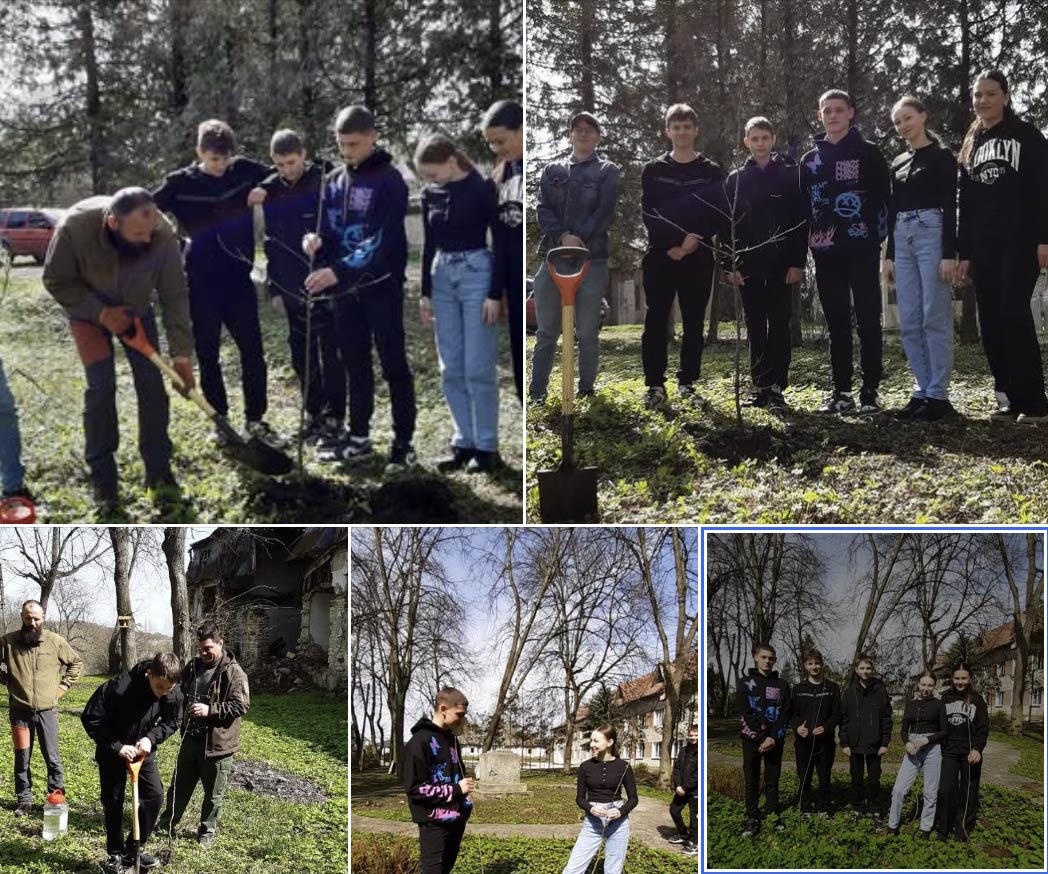
NGO Center for Ecology, Tourism, and Sustainable Development (EcoCenter) restored parts of the natural ecosystem in the Boryslav City Park of Culture and Recreation, in the Lviv region. In particular, 250 seedlings of local trees (oaks and firs) and 200 seedlings of endangered herbaceous plants from the Red Data Book of Ukraine (bear’s garlic, snowdrops, white flowers, and forest lilies) were planted there.
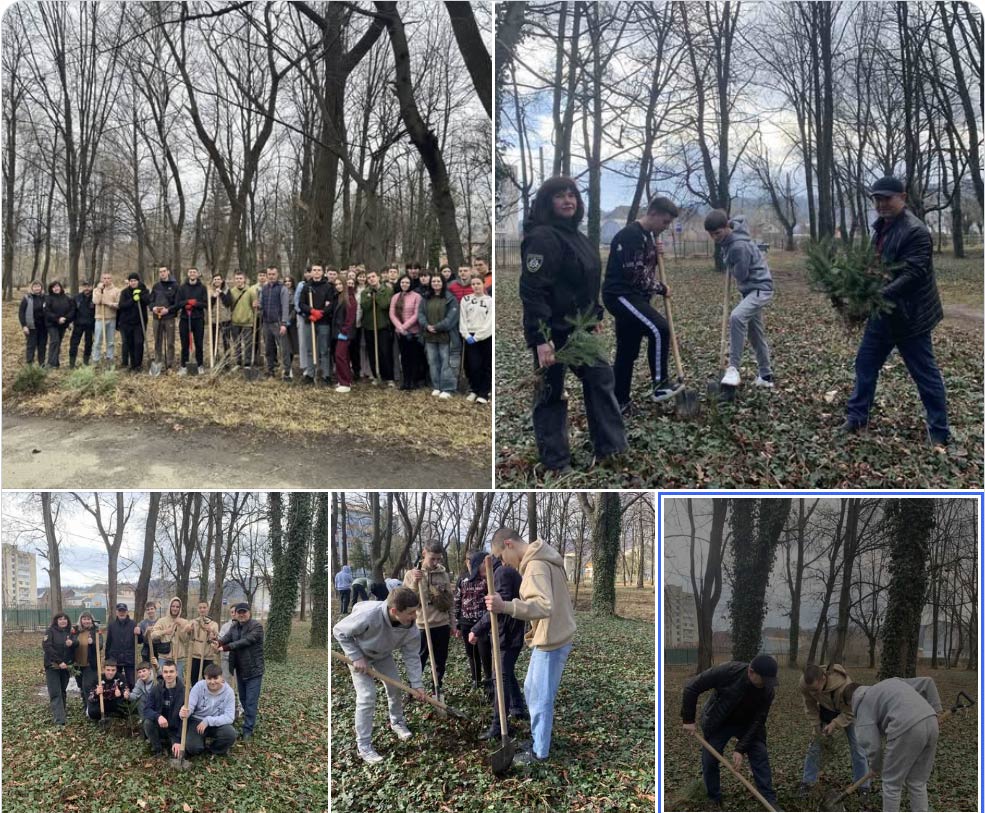
In addition, a seminar was held for local residents on the care of green spaces, and a corresponding brochure with recommendations for city park staff was developed. Some copies were provided to the Department of Biology and Chemistry at Ivan Franko Drohobych State Pedagogical University, while others were sent to the Central City Library. Together with students, a series of five educational videos on invasive species was also produced.
The EcoCenter team plans to continue overseeing the restoration and preservation of green spaces in Boryslav Park. An expert, Candidate of Agricultural Sciences Oksana Oleinyuk-Pukhnyak, was invited to conduct a comprehensive assessment of the park’s condition and provide recommendations for its ongoing maintenance.
Bats have moved into new houses in a nature reserve in the Mykolaiv region
NGO Today – The Future Begins assisted in relocating bats to specially designed shelters within the Yelanets Steppe Nature Reserve to protect and conserve their population. Together with specialists from the Bat Rehabilitation Center, the project team surveyed the national park area to identify the most suitable locations for the shelters. Previously, the bats had been living in the roof and walls of the Nature House of the reserve, which required major repairs. Subsequently, 20 bat houses and 10 camera traps were purchased and installed in the park with the help of park staff and students from Kalynivska and Malozhenivska Gymnasiums.
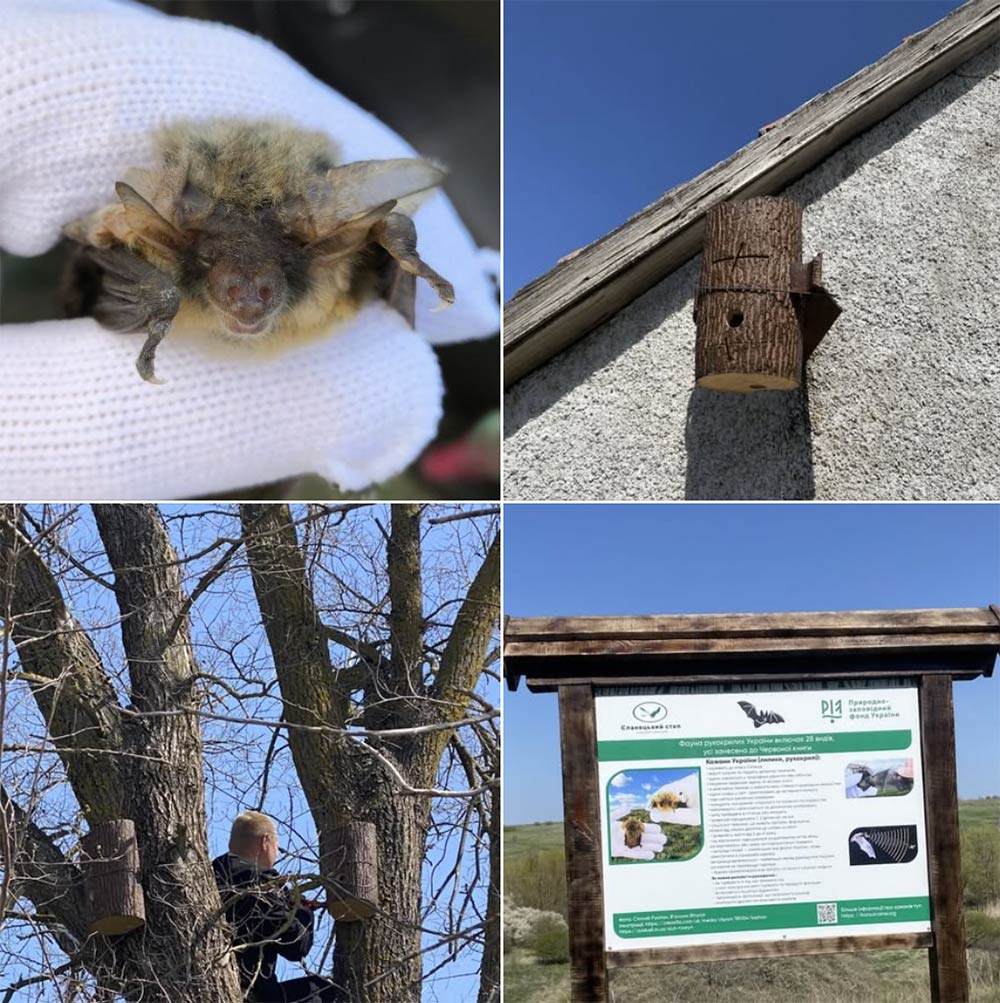
In addition, five lessons on bats were conducted for pupils from four gymnasiums of the community and for children from internally displaced families, along with an online seminar for ecology students at Petro Mohyla Black Sea State University and a roundtable discussion for local activists.
Going forward, the park staff will monitor the bats’ relocation and their overall condition. During the project, a new bat species for the reserve’s fauna — the gray long-eared bat — was discovered. Therefore, more detailed studies of the bat colony in the reserve and surrounding areas are planned.
We express our gratitude to the teams of each organisation for their productive work in preserving local biodiversity and promoting environmental education among community members. We wish that each project continues to thrive, develop, and contribute to the conservation of Ukraine’s valuable nature.

The activities were implemented within the framework of the project “Strengthening the NGO Network ‘EkoNet’ on Climate and Environmental Protection in Eastern Europe and Central Asia,” carried out with the support of Austausch e.V. and Bread for the World.
Translated from Ukrainian by Ecoaction volunteer Kseniia Khryplyvets.