
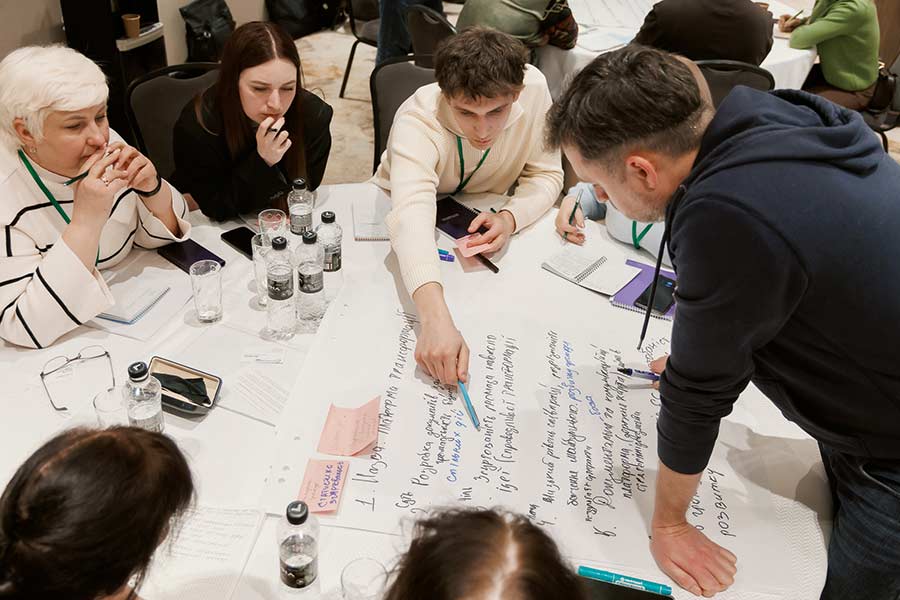
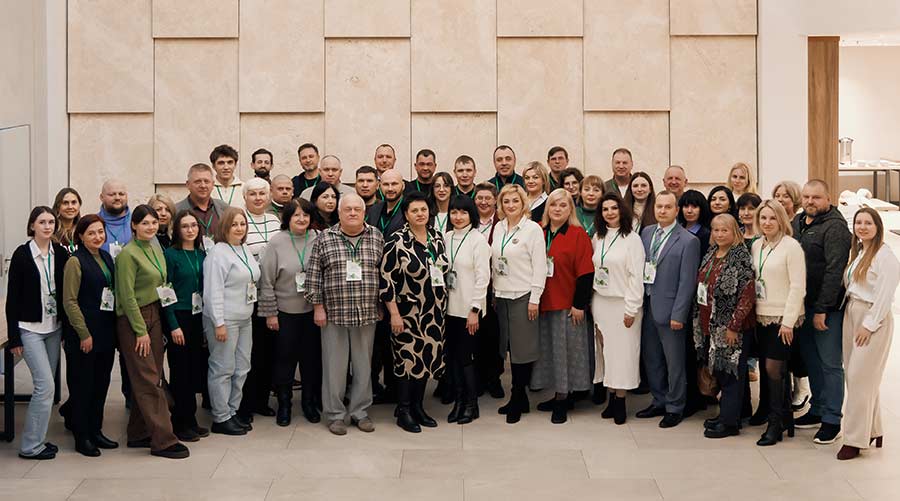
On 3-4 February the second workshop was organised by NGOs Ecoaction and the Luhansk Regional Human Rights Center “Alternative” in Kyiv.
The event served as a practical continuation of organisations’ systematic work on the just transition of Ukraine’s coal and industrial regions.
Approximately 55 representatives of local communities, civil society organisations, and educational institutions took part in the workshop. In total, more than 30 communities from 12 different regions of Ukraine have already joined the project.
The format of the event differed fundamentally from traditional training sessions. Participants worked with their own project ideas, learning how to develop concise “project profiles,” present them effectively, receive feedback, and view their initiatives from the perspective of partners and donors. Particular attention was given to team interaction, role distribution, and managing tension during the discussion process.
The project competition and the competition for project concepts/feasibility studies were officially announced during the workshop. These two competitions are considered not only as mechanisms for selecting initiatives, but also as a practical stage of learning. Even for communities that do not receive support within this project, the ideas developed may be further used in cooperation with other donors and partners. The key objective is to strengthen the capacity of communities to independently prepare high-quality projects and to systematically work with diverse sources of resources within the processes of recovery and just transition.
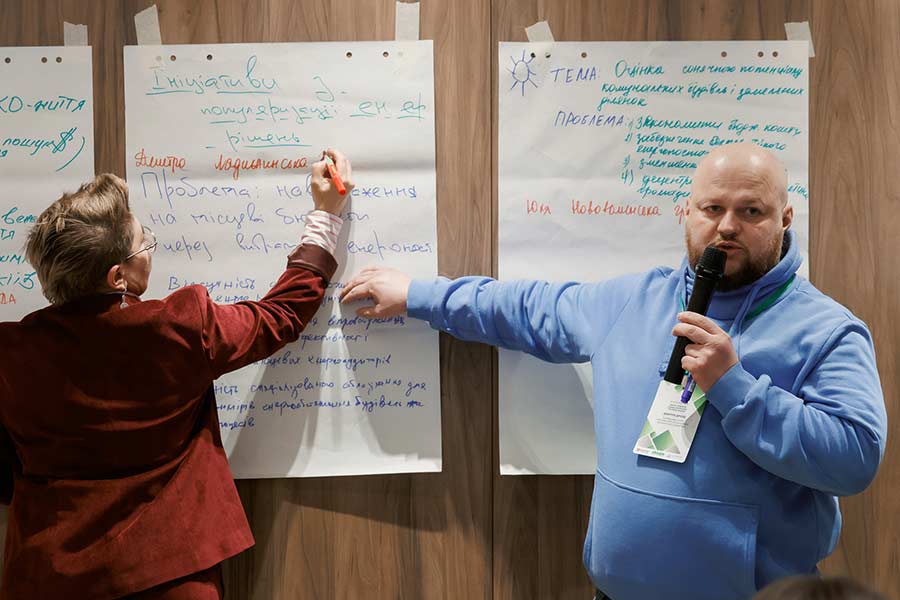
“Just transition requires more than simply having an idea. Communities need the ability to transform their needs into clear and well-structured projects that can be implemented together with partners. This workshop focused precisely on learning how to think in project terms, work with feedback, and see proposed solutions within a broader context of change,” noted Tetiana Deriabkina, a specialist at the NGO Ecoaction.
For some communities, this stage will mark the beginning of implementing specific projects. For others, it will provide an opportunity to further refine their ideas and later present them to other funding sources. In any case, the experience gained will remain a valuable resource for future work.
This event was funded with UK International Development from the UK government The views expressed in this publication are those of the authors and may not coincide with the official position of the UK government.
Translated from Ukrainian by Ecoaction volunteer Kseniia Khryplyvets