
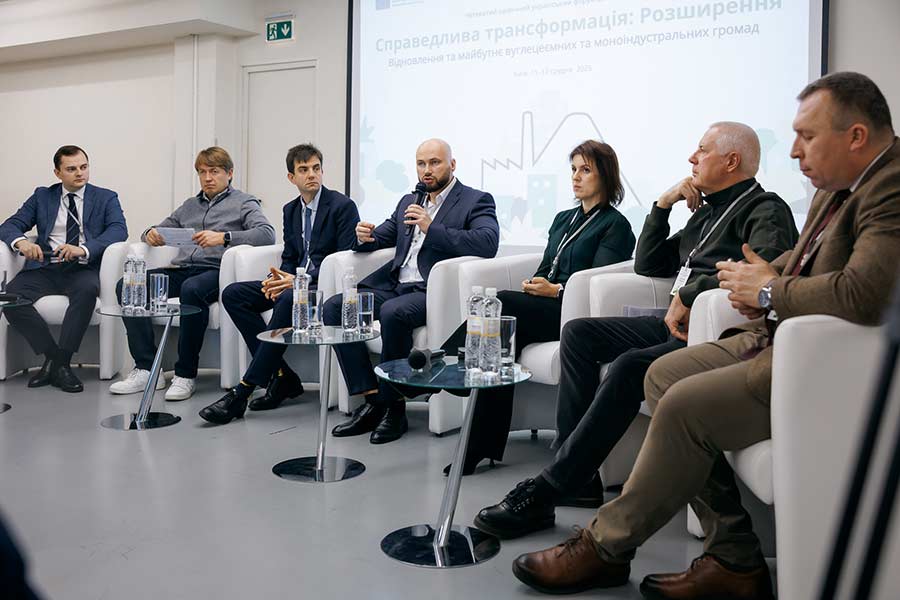
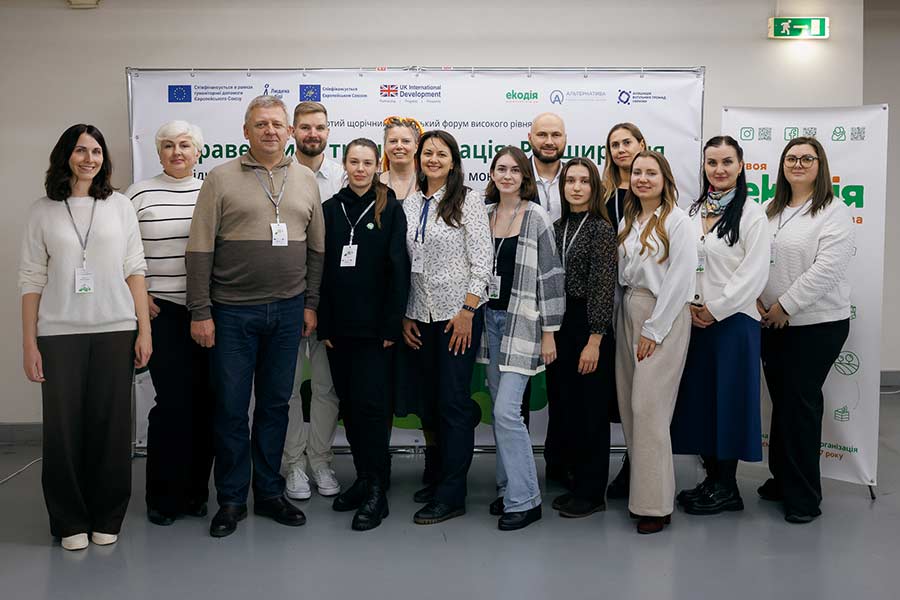
On December 11, Kyiv hosted the fourth annual high-level forum “Just Transition: Evolution. Recovery and the Future of Carbon-Intensive and Mono-Industrial Communities” This year’s focus was on the future of just transition in Ukraine and scaling the experience of coal communities to other carbon intensive regions.
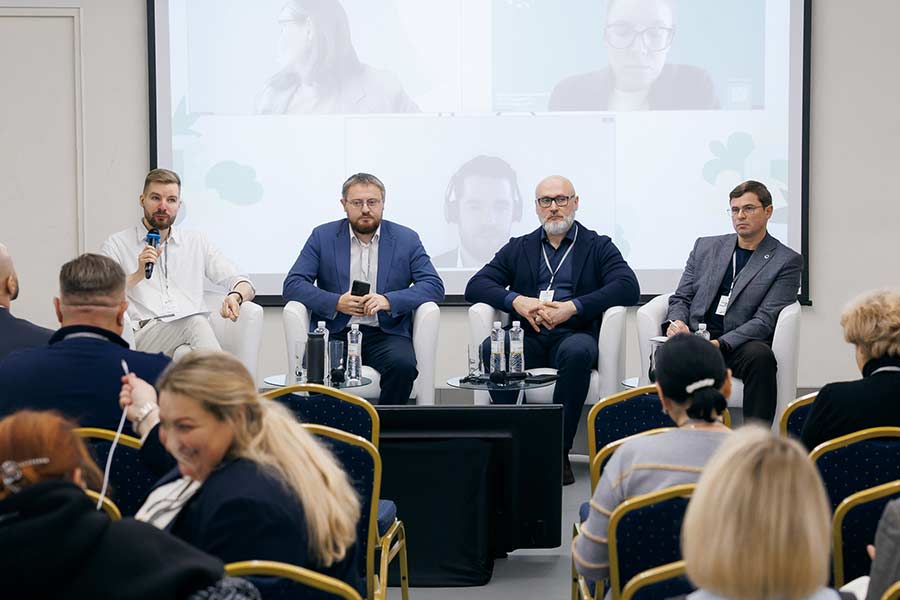
The forum became a platform for discussing how to implement the government-approved State Target Program for the Just Transition of Coal Regions, and what is needed to involve not only coal mining towns but also other carbon-intensive and mono-industrial communities in the process. Participants included representatives from the government, parliament, local authorities, civil society organizations, and experts.
Transformation is already underway
Ecoaction’s Executive Director Oleksii Pasyuk reminded that the issue of phasing out fossil fuels and transforming the economy has been at the center of the organization’s work for many years.
“We proceed from the fact that fossil fuels create problems for the environment and, accordingly, for the health of people. On the other hand, from the very beginning of working on this topic, we understood: the transition we expect will fundamentally change the economy and people’s lives. We knew it would take time and adaptation, especially for those directly working in the sectors where these changes will occur. Previously, this was perceived as something distant, but now we live in a situation where it is already happening — and this is recognized at the state level. This is a process that will be difficult to stop even with political decisions, because technological changes are already evident,” noted Oleksii Pasyuk.
Since 2018, when Ecoaction began working on just transition, much has changed. About 30 communities have already joined the transition processes, there is state-level understanding of the problem and a corresponding program. At the same time, this is not enough, because changes affect not only coal regions.
What is the government’s position?
Central government representatives spoke about how government decisions must consider not only strategic vision but also the real situation in communities. They discussed challenges and the need to balance current needs with future planning. This logic was outlined by Deputy Minister of Communities and Territories Development Oleksii Riabykin.
“There is a certain paradox in the fact that the state, regions, and communities, during a full-scale war, still have to think about the future. It would seem more logical to focus all resources on the war — and that’s natural. But on the other hand, we should think about people. It’s always about people: how to ensure that they don’t leave the Pavlohrad community? Or Lviv region, where the population is also declining. Because if people move from the Pavlohrad community to safer parts of Dnipropetrovsk region, from Sheptytsky they go abroad. This is a huge problem. When we talk about just transition, we talk about people: how to create jobs, ensure quality services, healthcare, education, communal services,” noted Oleksii Riabykin.
He pointed out that this year the state adopted a target program for the just transition of coal regions, which sets the framework but so far lacks funding from the state budget.



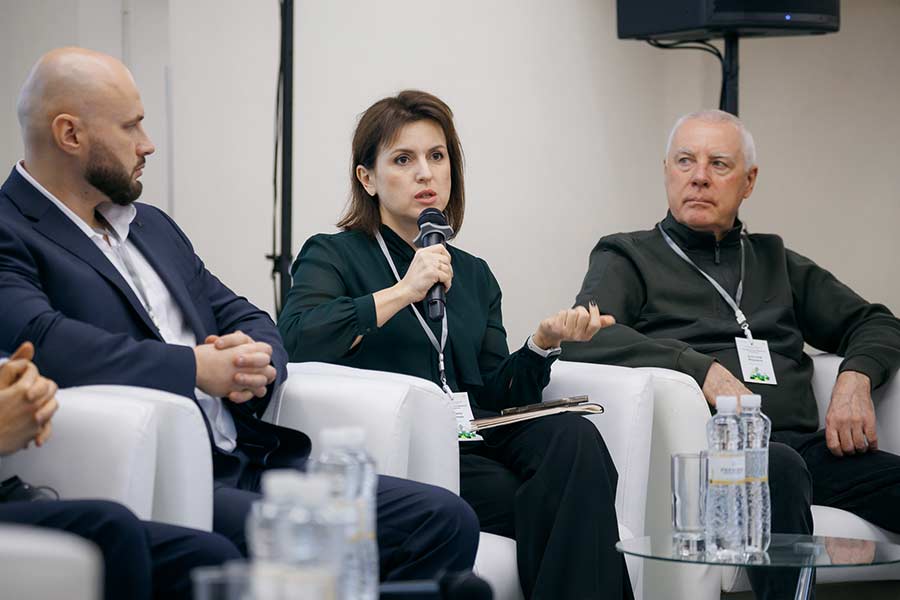
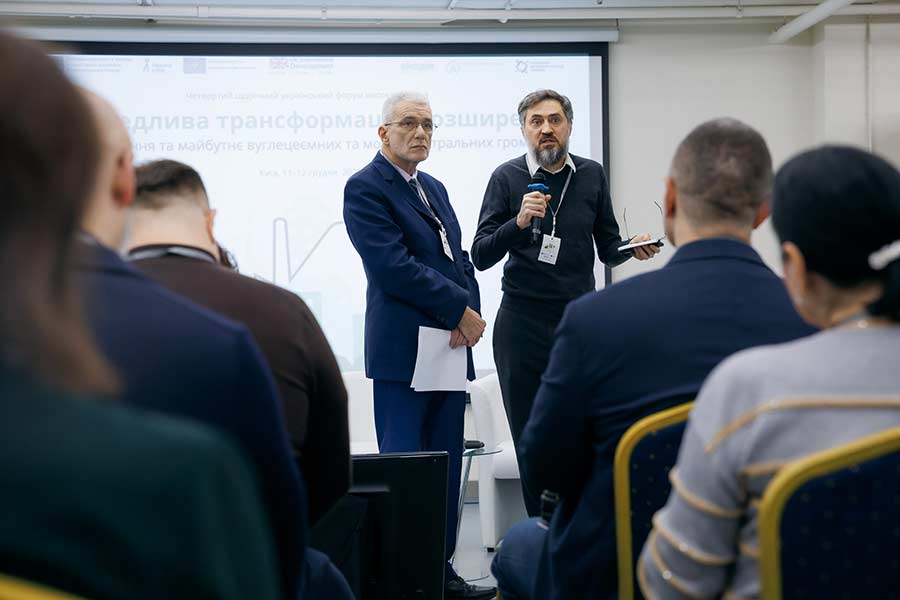
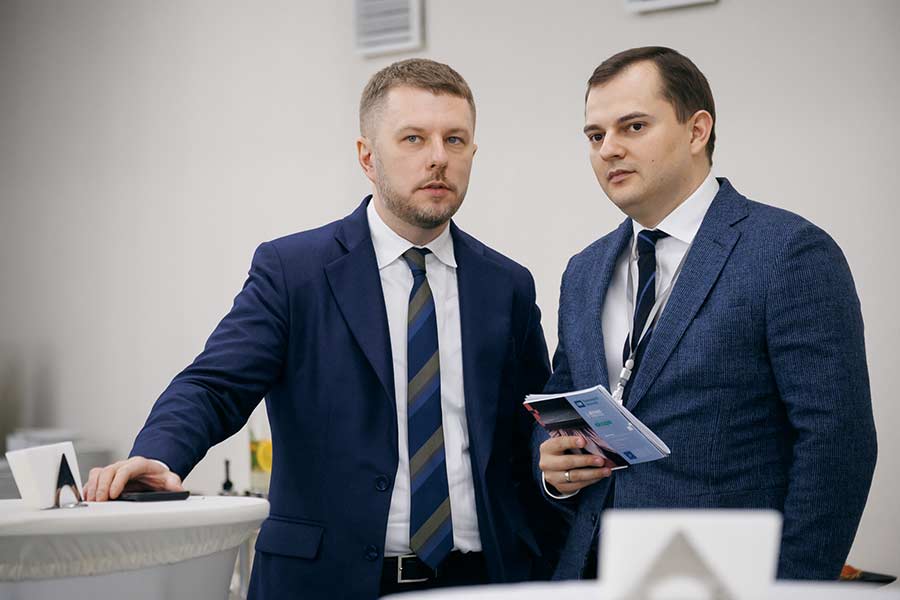
“It is very good in content, but there is no funding yet. This is a serious challenge: without money, it will be extremely difficult to implement the program. Where the state cannot yet provide sufficient support, our international partners are helping communities. It is important to continue scaling this cooperation. Just transition is a process for many years. Therefore, at this stage and beyond, it is important to listen to each other and provide advice,” emphasized Oleksii Riabykin.
Communities’ experiences: how to support people and change the economy
Participants paid special attention to how transition feels on the ground. Communities already undergoing economic changes spoke about their priorities: quality of life, opportunities for youth, new professions and services. Current people’s needs were shared by the Mayor of Sheptytskyi (Lviv Oblast), Andrii Zalivskyi.
“Over four years, 11,000 people have left our community. Therefore, the goal of transiion is to change the quality of life so that people want to stay here. And people will stay if children feel comfortable. That’s why we are now prioritizing education and healthcare: quality medical services and interesting educational projects. What’s important here? New professions that are completely unlike mining ones. At first, this was met with caution and surprise. But now, in each of our three institutions, there are new specialties, a new social direction, and children are fully motivated,” shared Andrii Zalivskyi.
The head of the Luhansk Regional Human Rights Center “Alternativa,” Valerii Novykov, emphasized that communities need to better understand what just transition means, and that it happens regardless of how actively they participate.
“Communities need to better understand what just transition is. And this is not only about leaders or administrations, but also about people in these communities. Because just transition happens independently of whether the community actively participates or not. It happens on its own because the world is changing, the economy is changing. And if a community does not transform and adapt to the new reality, its future will be much less optimistic. Essentially, communities today are places where people are. And regardless of circumstances, we must prepare to host people and provide them with a safe and economically viable life,” noted Valerii Novykov.
Energy transition — a challenge for all
Participants emphasized that energy changes affect not only coal mining towns. They impact the entire country, and even in wartime conditions, this topic cannot be put “on pause.” Andrii Gerus, Chairman of the Verkhovna Rada Committee on Energy and Housing and Communal Services, spoke about the need to move forward while maintaining economic viability.
“Undoubtedly, while the war continues, launching large projects is difficult. If we talk about energy architecture, it needs to be maintained. Enterprises must operate, develop, and ensure budget revenues. If an enterprise survives only on subsidies, that’s not development — it’s a social burden. We need to determine the fate of enterprises operating on the edge. There are risks that some of them will have to be closed,” noted Andrii Gerus.
He drew attention to the fact that new energy solutions and projects are already emerging in some communities, including in Novovolynsk, creating alternatives for workers in old sectors.
Just transition is not just about coal
Policy Fellow Ganna Gladkykh emphasized that in scientific and international policy, the concept of just transition has long gone beyond coal regions alone.
“The changes in industrial policy are already underway: in metallurgy, agriculture, and mineral extraction. These also involve significant changes at the territorial and community levels, building new value chains, and new needs: what education is required, which workers with which qualifications. If we do not incorporate the just transition aspect into these new plans now, we will face a similar situation in 10–20 years as we do today with coal regions. The current level of knowledge and understanding of potential negative consequences is such that we can prevent this if this aspect becomes more mainstream at the level of all regions and key economic sectors,” noted Ganna Gladkykh.
Aron Kerpel-Fronius, Energy Advisor at the EU Delegation to Ukraine, noted that the topic of just transition gained momentum in the EU with the launch of the European Green Deal, which embeds the principle of “no one left behind.” In his view, for Ukraine in the process of European integration, the priority will be identifying regions to be included in just transition policy. New regions will be able to build on the experience of coal communities that have already covered part of this path.
Financing for transformation must be diversified
Communities currently rely primarily on grant support to implement their transformation projects. However, it is crucial to have a whole basket of financial instruments, combine them, attract private investments, and develop local human resources and expertise potential.
Torsten Wöllert, Minister-Counsellor at the Delegation of the European Union to Ukraine, stated that launching certain programs for a just transition is only part of the so-called reconstruction of the Ukrainian economy. In his view, the next step in seeking financing opportunities should be to involve business representatives in such discussions.
“We need to engage more business representatives because they have an interest in diversifying their activities. They will invest in the business of the future, not the past. Municipalities are also interested in this – so that local businesses develop. To create the future together,” Mr. Torsten emphasized.
Communities are already actively moving along the path of just transition, with programs, plans, and projects in place. While the war continues, state support opportunities are limited, so it is very beneficial that the EIB is launching a targeted financing program for coal regions. Nevertheless, communities should not limit themselves to this tool alone and must diversify their funding sources.
The topic of phasing out fossil fuels is becoming more acute
The “Just Transition: Evolution” forum shows that despite the war, the topic of phasing out fossil fuels and reformatting the economies of carbon-dependent and mono-industrial communities does not disappear from the agenda. On the contrary — it becomes even more acute, because decisions made now will determine whether these communities will have jobs, quality services, and motivation for people to stay.
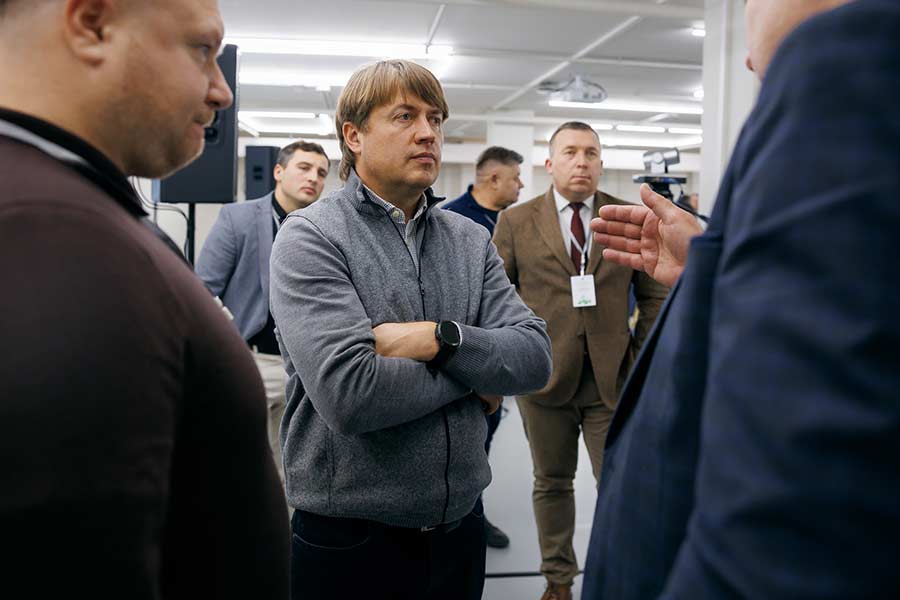
Decision-makers and those who see the consequences of these decisions daily met on one platform. For the national government, this is an opportunity to get honest feedback; for communities, a chance to articulate their needs and find partners. Forum participants agree: just transition is a long but necessary path to a new economy, with people and their security—economic, social, and energy—at its center.
The event took place as part of the projects “Support for Winter Preparation and Renewable Energy at the Local Level in Ukraine” in cooperation with the Czech humanitarian organization “People in Need” and “RePower the Regions: Ambitious and Inclusive Clean Energy Plans to Reboot Regions in Need of Just Transition” with financial support from the European Union.