
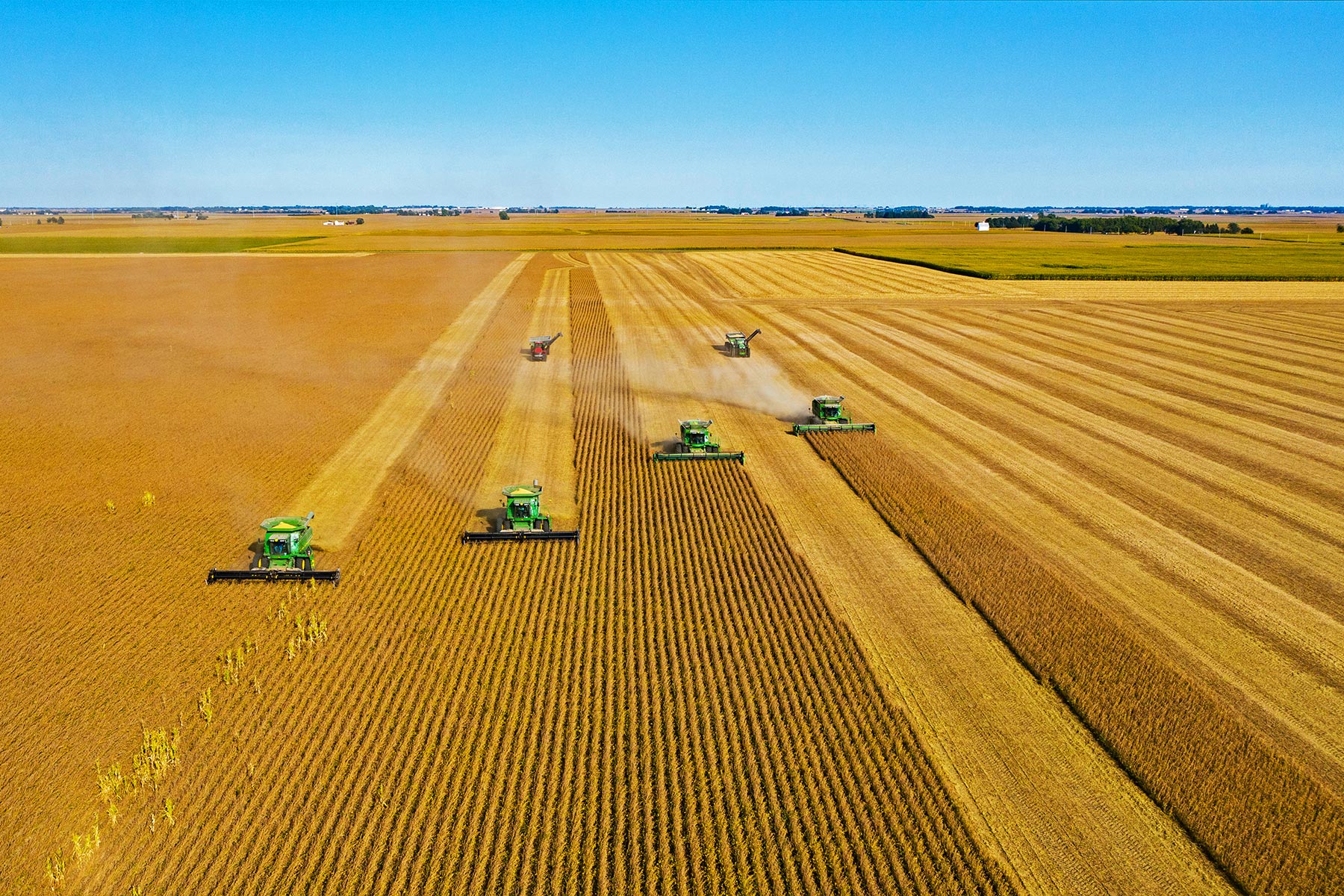
Land concentration is the accumulation of large areas of land for use by a single enterprise. This phenomenon can pose environmental and social threats to communities, as companies are often guided primarily by economic interests. Therefore, land concentration can lead to the destruction of biodiversity, soil degradation, loss of access to land for local people, and, as a result, migration, or even poverty or hunger.
The Land Matrix Initiative compiles a database with information about large-scale (200 ha and more) land acquisitions (LSLAs) or leases for agriculture, forestry, tourism development, wind and solar power plants, mining, and other purposes.
The main element in the database is a deal, within which information is filled in about the activities and location of the enterprise, investors, impacts on communities and the environment, gender issues, etc. So far, the database contains information on 7909 deals from different regions. In the Eastern Europe region, 1287 deals have been collected, 381 of which are in Ukraine.
Why is this data important?
Since LSLAs can limit land access and violate the rights of local residents, careful monitoring of these deals is very important. With reliable and up-to-date data on land concentration, it is possible to identify potential risk areas, prevent possible damage, and mitigate the impact of land concentration activities on the social and environmental conditions of communities.
Who can use Land Matrix data?
The information in the database is open and available to everyone. It may be especially useful for people working on land issues, including:
- Scientists
- Journalists
- Human rights defenders
- Government officials
- Development agencies
- Business
- Civil society
- Landowners, etc.
Why is this information needed?
Globally, Land Matrix data helps track the evolution of the global land grabbing (or competition for control over land), monitor and assess the impact of LSLAs on communities and the environment, and increase transparency and accountability of LSLAs decisions. This information is useful for preparing scientific, analytical, and journalistic materials.
Within the framework of the regional center in Eastern Europe, which is coordinated by Ecoaction, Land Matrix data has also been used as the basis for analytical materials and research. Here are just a few examples:
Country profile of Ukraine on landowners and land use — a brief overview of land concentration in Ukraine, including information on where it is most noticeable, who the ultimate beneficiaries of companies are, and in which counties they are registered, and how agricultural land was “acquired” during the moratorium on its sale. Similar profiles were also created for other countries and can be accessed here.
Large-scale investments and land use in Ukraine in satellite images. For this purpose, the authors selected three sites where, according to Land Matrix data, foreign companies had leased large land areas. In these sites, using satellite images, they studied whether these companies comply with crop rotation and laws restricting the ploughing of certain types of land. Unfortunately, the worst assumptions were confirmed, and the researchers found ploughing of slopes, which contributes to erosion and washing out of the fertile soil layer, and they even found ploughing on the territory of the Halych National Nature Park. It was precisely the Land Matrix data that became a kind of guidepost indicating where to look for violations.
Activities of international companies in the russian market following the full-scale invasion of Ukraine. russia’s invasion of Ukraine in February 2022 became an impetus for many countries to introduce sanctions against the aggressor country, and for foreign companies to leave the russian market so as not to finance the war. Since Land Matrix collects data on land purchase and lease, including in russia, the database helped to identify companies that continued their activities there a year and a half after the invasion.
The study analyzed information about 267 companies that operated in the russian market before the beginning of the full-scale invasion of Ukraine. As a result, it was found that 28 companies in the forestry industry continued their work in the aggressor country. Among 169 deals involving 200 foreign companies in the agricultural sector, it is reliably known that only three companies have left the russian market.
Many questions arise regarding sustainable and inclusive land use. It is important to research and find answers to the most pressing issues to ensure people’s rights to land, a safe environment, work, etc. Therefore, we encourage the use of Land Matrix data to study problematic issues in land use, so that this list of valuable research will only be expanded.
If you work in the field of land use, plan to conduct similar research, or want to contribute to collecting/updating data for the Initiative, email us at landmatrix@ecoaction.org.ua
Translated from Ukrainian by Ecoaction volunteer Sofiia Yanchuk.