
Back in May 2022, Ecoaction defined the principles that would allow green and sustainable post-war recovery. The aim was to ensure that Ukrainian cities and villages liberated from Russian occupation or recovering from shelling could return to life under safer, more comfortable, and more climate-friendly conditions.
Alongside sharing information about the principles of green recovery, we were also able to support a number of NGOs in putting these principles into practice within Ukrainian communities.
In the summer of 2023, we selected 10 projects through a competitive process to serve as practical examples of green reconstruction. These projects were submitted by NGOs, with priority given to local organisations working directly in the communities where the projects were to be implemented, as well as to organisations with proven experience in community-based initiatives.
It was also important to us that these were not just imposed or boilerplate projects, but projects that actively united and engaged different groups of community residents — including local authorities, utility workers, educators, youth, entrepreneurs, activists, and others.
As a result, 10 projects received support from Ecoaction and were implemented between July–August 2023 and the end of January 2024. Below, we present and discuss the results of these projects.
Close to nature: biodiversity space in Krasnokutsk, Kharkiv region
Implemented by: Ukrainian Nature Conservation Group (UNCG)
The Ukrainian Nature Conservation Group continued its work with the Krasnokutsk community in the Kharkiv region, for which it had previously developed recommendations for nature-based post-war restoration with the support of Ecoaction. This time, some of the recommendations concerning the creation of biodiversity areas and mixed-grass lawns were put into practice.
The biodiversity space was set up on the territory of Krasnokutsk Lyceum №1. Its creators aimed for it to be more than just a one-off planting site, but rather a long-term educational project that would unite community members to rethink their relationship with nature and to take actions that make the community more resilient to climate change.
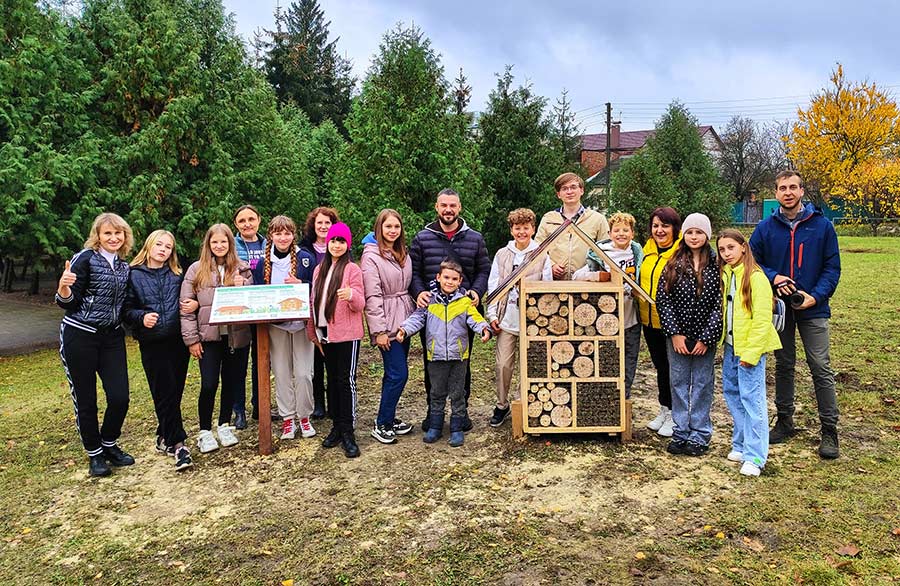
“We are delighted that the creation of the Biodiversity Space is already contributing to many important processes and generating a wide range of ideas for further development. One of these ideas is the establishment of a permanent biology school based at the Krasnokutsk Lyceum. Already, students, together with teachers and botanists, are studying the local flora and the impact of climate on experimental botanical plots that were recently established at the lyceum. We are also pleased that such projects foster collaboration and joint work between NGOs, volunteers, educational institutions, scientific and environmental organisations,” notes the team of NGO «Green Art Tour», a local organisation involved in the implementation of the project.

As for the components of the space itself, the project’s specialists planned the layout of a wildflower meadow area and an experimental lawn for studying plant phenology (seasonal phenomena and changes). Seeds for the space were collected in the Kharkiv and Sumy regions to ensure that only local plant species were used. The project’s botanists also organised a seed-collection workshop, inviting students, teachers, and community volunteers, who later used the collected seeds to sow nearly 1 000 m² of the schoolyard.

The space also features insect hotels, nesting boxes for birds, a watering spot, shelters for hedgehogs. You can see how the project was implemented in the video presentation:
Another goal of the UNCG within this project was to share its experience and tools that can be used by other communities. Among the materials that the team openly shares with others are:
- instructions for creating structural elements of the space;
- information boards that can be printed and installed as on-site signage.
‘Know to rebuild!’ Green solutions for the restoration of the city of Zaporizhzhia
Implemented by: NGO Ecosense
The NGO “Ecosense” has dedicated another project to Zaporizhzhia, where the organisation is based.
As a reminder, with the support of Ecoaction, the organisation developed the following recommendations for local authorities:
- an overview of climate change adaptation measures for the city of Zaporizhzhia that are recommended as priorities for implementation during post-war restoration;
- recommendations for the restoration of Zaporizhzhia’s energy infrastructure (taking into account the need to adapt to various emergencies and decarbonisation goals).
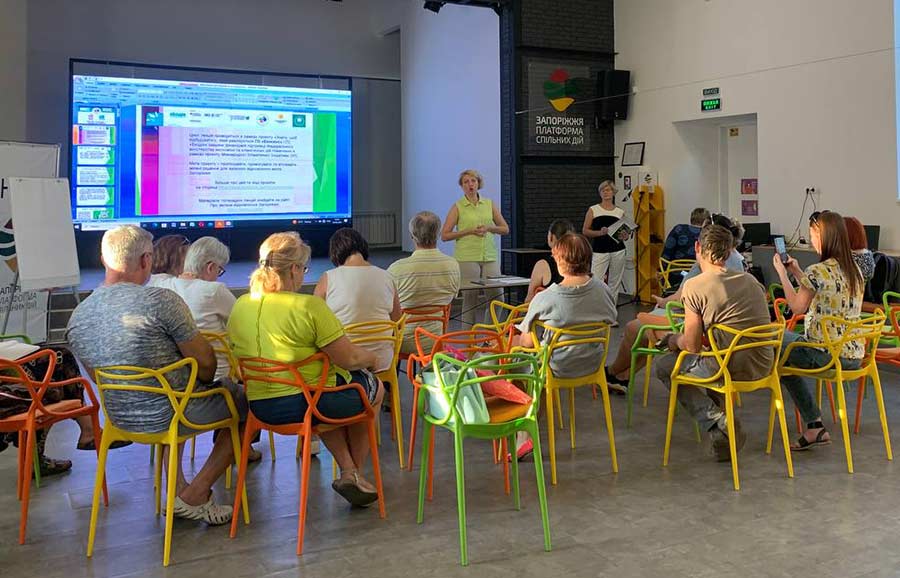
In the new project, the Ecosense team decided to focus primarily on city residents, targeting HOAs, housing cooperatives, entrepreneurs, and utility workers. The project’s main theme was the greening of residential areas in the context of war and climate change.
To inform Zaporizhzhia residents about how to make urban spaces more comfortable and adaptable to climate change, the NGO Ecocensus held a series of lectures on the following topics:
- Greening courtyards during war and climate change
- Spatial planning of courtyards
- Plant selection for greening under the climatic conditions of Zaporizhzhia
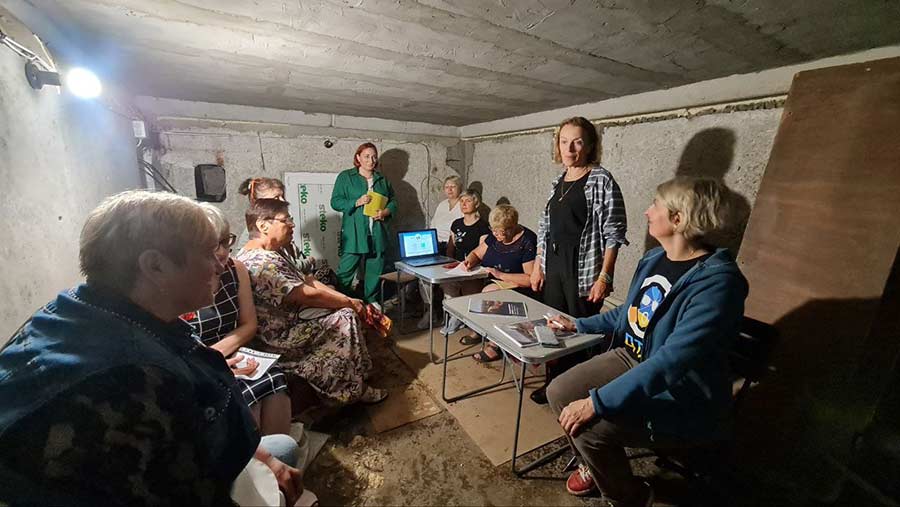 Holding a lecture ‘Greening courtyards during war and climate change’ in a shelter
An important part of the project was the involvement of sociologists, who studied the views of Zaporizhzhia residents in order to understand how to improve the quality of urban landscaping and greening and to develop appropriate recommendations. Experts conducted a survey of city residents both online (via social media) and offline during educational events. A separate focus group study was organised with the heads of HOAs. The research findings were presented during a roundtable presentation attended by representatives of relevant city council departments, NGOs, and residents themselves.
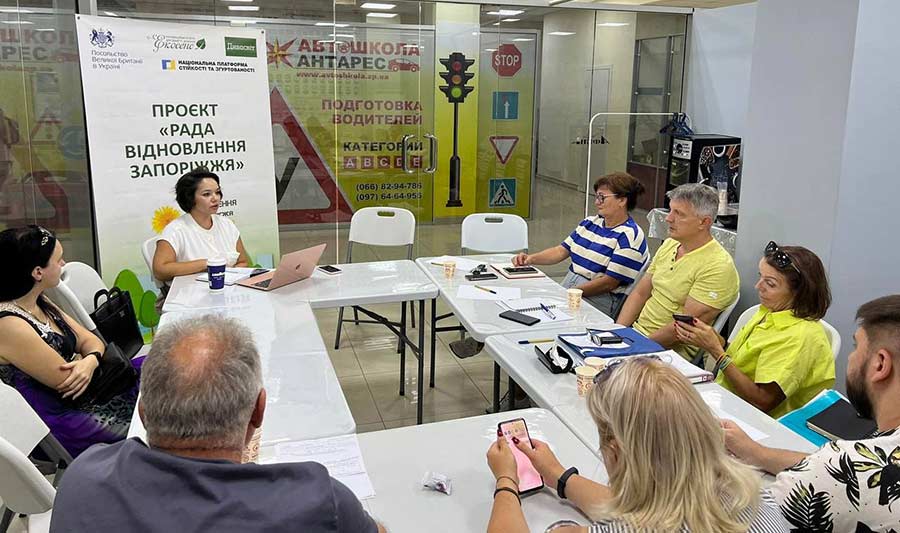 In the process of focus group research
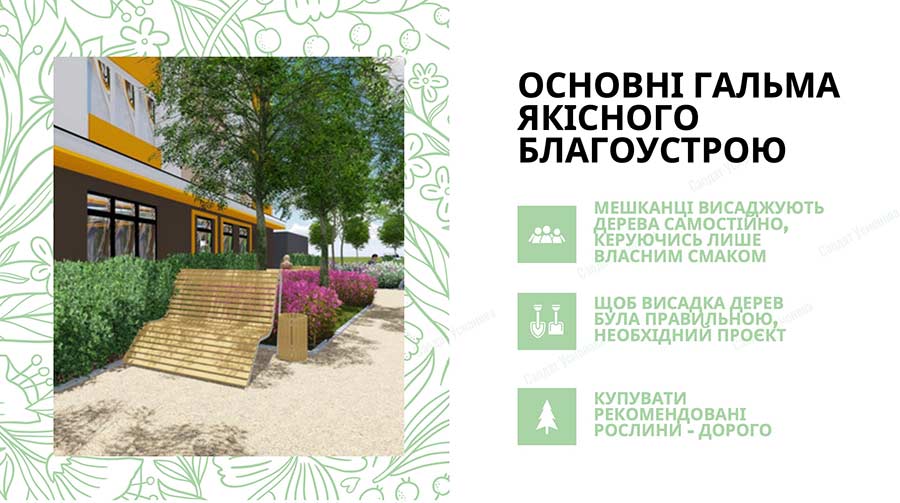
Screenshot from the presentation of the sociological study findings
The NGO conducted a series of on-site lecture-consultations, during which the surrounding areas of multi-storey residential buildings were assessed, and recommendations were provided on courtyard greening and plant care. The organisation also selected several HOAs through a competitive basis, where it carried out a demonstration landscaping project, putting into practice the knowledge shared during the training sessions.
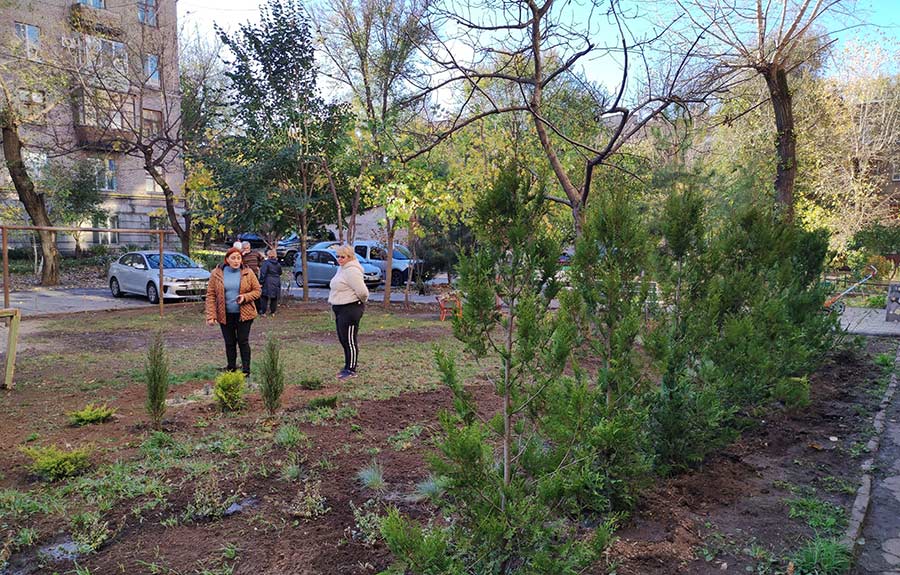
“After analysing the site and listening to the wishes of the residents of the HOA, we chose a landscape-style approach to greening, as the location needed to be appealing to the people who live in this building. When selecting plants, we focused on ease of maintenance: the planted shrubs and grasses require minimal watering and fertilisation,” — says Nataliia Derevianko, a specialist at the Khortytsia National Educational and Rehabilitation Academy, speaking about the demonstration greening initiative.
Another output of the project is the guidebook ‘Plant Selection for Greening Residential Areas in Zaporizhzhia,’ which has been published in open access. The guide was also shared with the Zaporizhzhia City Council’s departments responsible for housing and utilities and for environmental safety, distributed among the HOAs, and sent out to the lecture participants.
In addition, Ecosense continues to actively contribute to the «Vidnova» platform, which highlights its own restoration planning activities and collects a variety of useful materials that are freely available to anyone interested.
Research on water bodies and analysis of the impact of composting in Lyubotyn, Kharkiv region
Implemented by: NGO ‘Centre for public and media initiatives’ (Zero Waste Kharkiv)
The Centre for Public and Media Initiatives (CPMI) has twice received support from Ecoaction for its work in the Lyubotyn community. First, the organisation developed recommendations for environmental restoration: researchers assessed how the city was affected by the russian invasion, its vulnerability to climate change, and ways to simultaneously restore the community while strengthening its resilience to climate change.
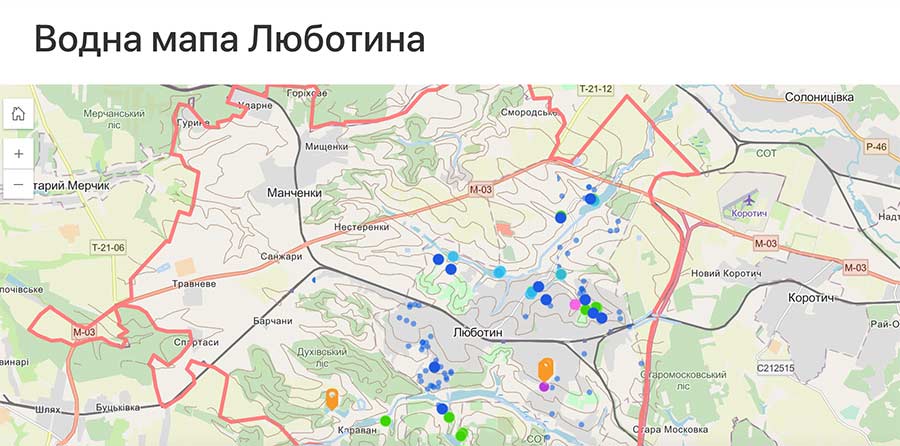
During the second round of support, the organisation analysed water quality in wells and ponds in the community, as well as the tap water in Lyubotyn. This was the first study of its kind focusing on the community water bodies. Particular attention was paid to wells, as under conditions of russian aggression, there is a risk of disruptions to the centralized water supply, and wells may serve as an important alternative source of water.
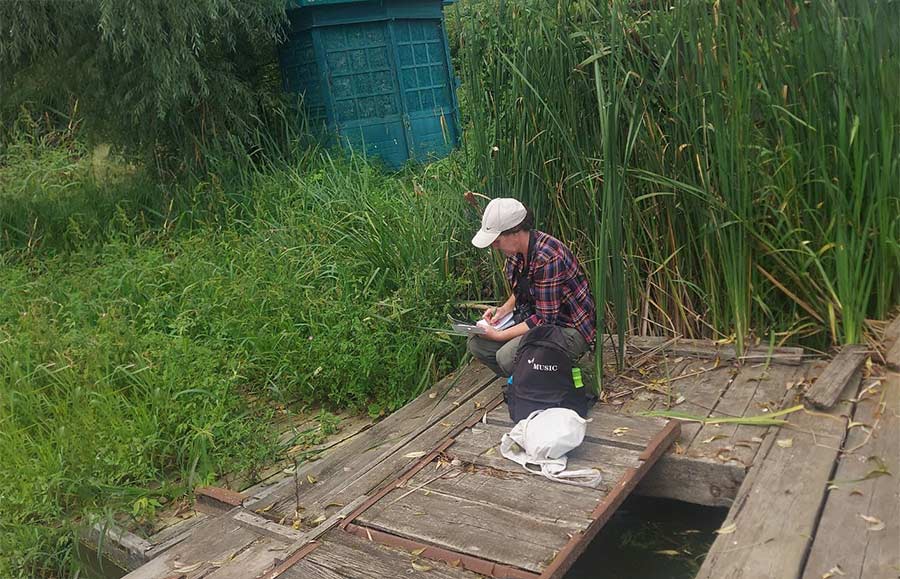
In total, researchers analysed water samples from 17 ponds, 18 wells, 2 springs, and the municipal water supply. According to the results of the research, in half of the surveyed wells, the water is more or less turbid and would require filtration if used for drinking, and in some cases, it contains substances that are harmful to human health. The vast majority of wells have very hard water; using such water for irrigation may lead to increased soil mineralisation and secondary salinisation.
“Some of the wells are not functioning, their technical parts require repair, and others lack convenient access. Local authorities do not pay enough attention to the improvement of areas around the ponds,” the research report says.
At the same time, the quality of water in the water supply system of the city of Lyubotin complies not only with Ukrainian but also with international sanitary standards (with the exception of iron content, which requires de-ironisation).
The project team also conducted algological research, examining algae inhabiting water bodies. A total of fifteen samples were taken from ten ponds and analysed at the Department of Botany and Plant Ecology of V.N. Karazin Kharkiv National University. According to the experts’ conclusions, the analysed water bodies can be classified as Class IIIin terms of water quality, indicating moderate organic pollution.
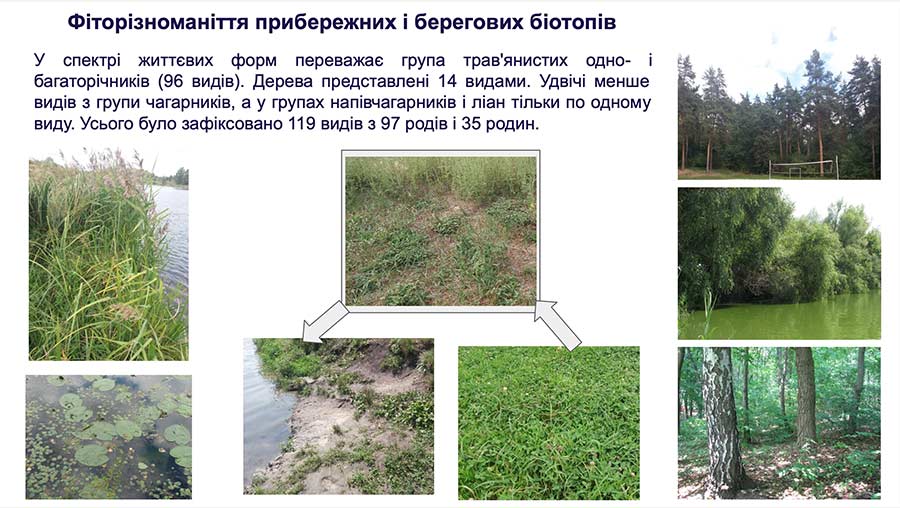
In order to inform as many community residents as possible about the results of water quality analysis in ponds and wells, CPMI has developed an interactive map, which the organisation plans to update on a regular basis.
Another part of the project was to examine the role of composting in reducing greenhouse gas (GHG) emissions, using the example of public composters that have been operating in Lyubotyn for several years.
During the first three quarters of 2023, almost 14 000 of household waste were removed from the Lyubotyn community, which has a population of over 20 000 people (this figure is not final, as official standards for municipal waste management services have not yet been approved in the community). At the same time, the total capacity of community composters in Lyubotyn currently mounts to 16 .
The researchers calculated that the potential reduction in methane emissions could be achieved by expanding the network of public composters in the community. The results show that introducing composting only for multi-apartment residential buildings (which account for about 3% of the total amount of waste generated) would reduce methane emissions by 130 tonnes of equivalent by 2030, which is about 5% for Lyubotin. Expanding composting to cover 20% of waste would reduce methane emissions by approximately 30%.
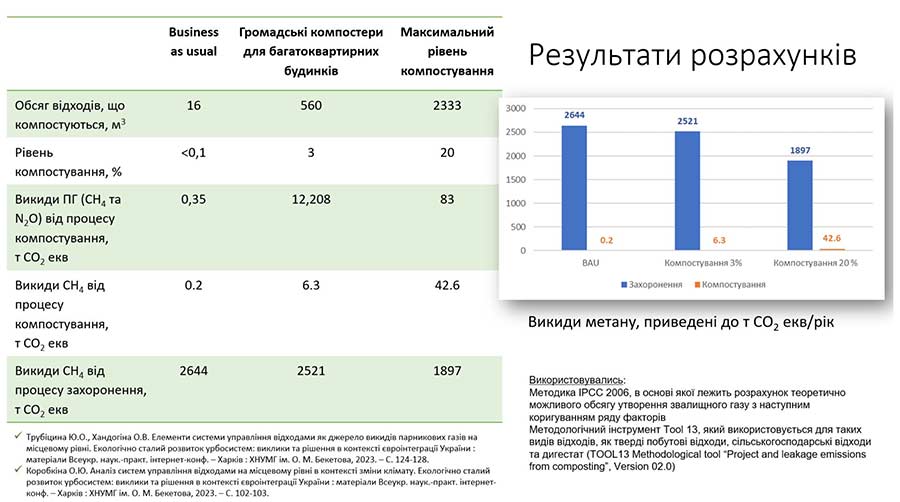
More information about this part of the project can be found in the report.
Presentation of the results and recommendations from both components of the study to the residents of the Lyubotyn community
Sustainable Energy and Climate Action Plan (SECAP) for the Teofipol community in the Khmelnytskyi region
Implemented by: NGO ‘Khmelnytskyi Energy Cluster’ (KEC)
The cooperation between KEC and the Teofipol community began when the community council itself approached the NGO in search of expert support for the development of green energy and the launch of climate-friendly projects. This was followed by KEC’s win in a competition organised by Ecoaction, which provided financial support for the development of a Sustainable Energy and Climate Action Plan (SECAP) for the community.
KEC organised the work on the SECAP in a way that ensured the maximum possible involvement of key stakeholders in its development, including the public, businesses, and local authorities.
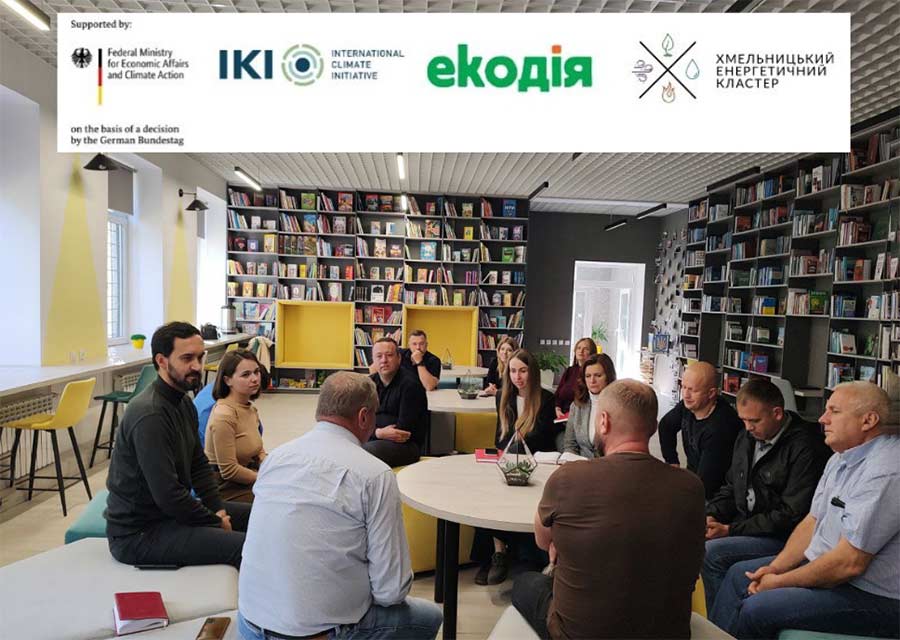
Meeting of the working group involving representatives of the public, business, and local authorities
The Teofipol community has committed to reducing emissions by 35% by 2030 compared to 2017 levels, and to achieving climate neutrality by 2050. The year 2017 was chosen as the baseline for emissions assessment because complete and reliable data on the consumption of all types of energy sources is available for that year, and it is also the most representative in terms of the current economic situation.
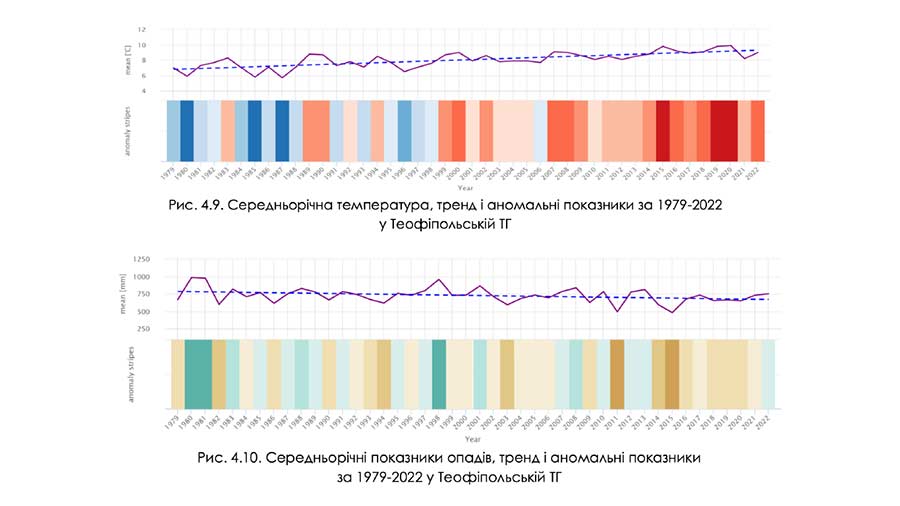 Charts from the SECAP section on climate change risk and vulnerability assessment
In addition, in June 2023, the project team supported the community in joining the Covenant of Mayors initiative — a European Commission initiative that brings together local authorities across Europe to jointly address climate change.
Measures to mitigate the negative effects of climate change in key sectors include:
- introduction of energy management systems in public buildings, increased energy efficiency, and the use of renewable energy sources;
- reduction of unproductive losses in water supply networks, and the use of energy-efficient equipment for water supply, drainage, and treatment;
- comprehensive thermal modernisation of residential buildings (HOA);
- improving the efficiency of public transport, using hybrid and electric vehicles, as well as cycling infrastructure.
Adaptation measures to climate change impacts include:
- development of a digital database on the state of the environment;
- expansion of the ecological network and reservation land, with subsequent inclusion in protected areas;
- improvement of the water bodies monitoring system and a 25% increase in the volume of wastewater collection and treatment;
- reduction of pollutant emissions from motor vehicles by 10% in exhaust gases; introduction of an air quality monitoring system through stationary monitoring stations;
- reduction in the overall intensity of waste generation;
- environmental education and awareness-raising for sustainable development, and others.
All measures proposed in the SECAP can be found in the full version of the document.
Both the Teofipol community and the Khmelnytskyi Energy Cluster are ready to continue cooperation and are committed to implementing the measures proposed in the SECAP.
Revival of the aesthetic and ecological functions of small watercourses of the Mlynivka (Stebnytska) and Radchanka rivers within the Ivano-Frankivsk Municipal Territorial Community (MOTG)
Implemented by: NGO ‘Innovative University’
The project team sought to prevent the destruction and disappearance of two small watercourses — the Mlynivka (Stebnytska) and Radchanka rivers. These rivers play an importantecosystem role within the Ivano-Frankivsk community, including supporting biodiversity and regulating water quality (additional ecosystem services are listed in the table below). In addition, both the Mlynivka and Radchanka are the water sources for Ivano-Frankivsk’s largest recreational area – the City Lake.
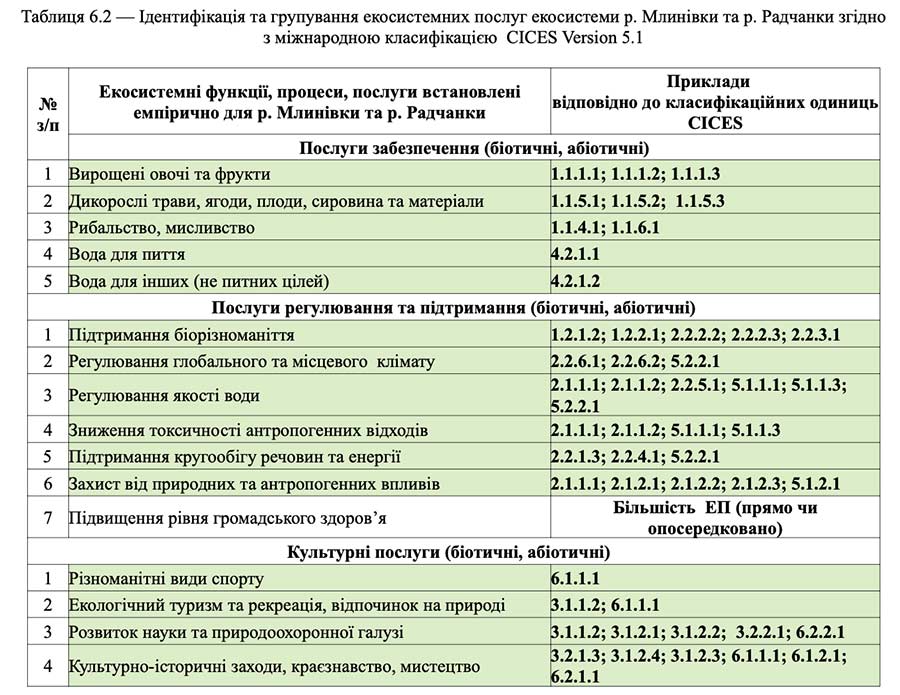 Table from the report of the Comprehensive Environmental Assessment of Mlynivka (Stebnytska) and Radchanka rivers, conducted as part of the project supported by Ecoaction.
At the same time, these watercourses suffer from human activities, including construction, the discharge of sewage, and the accumulation of debris in the riverbeds.
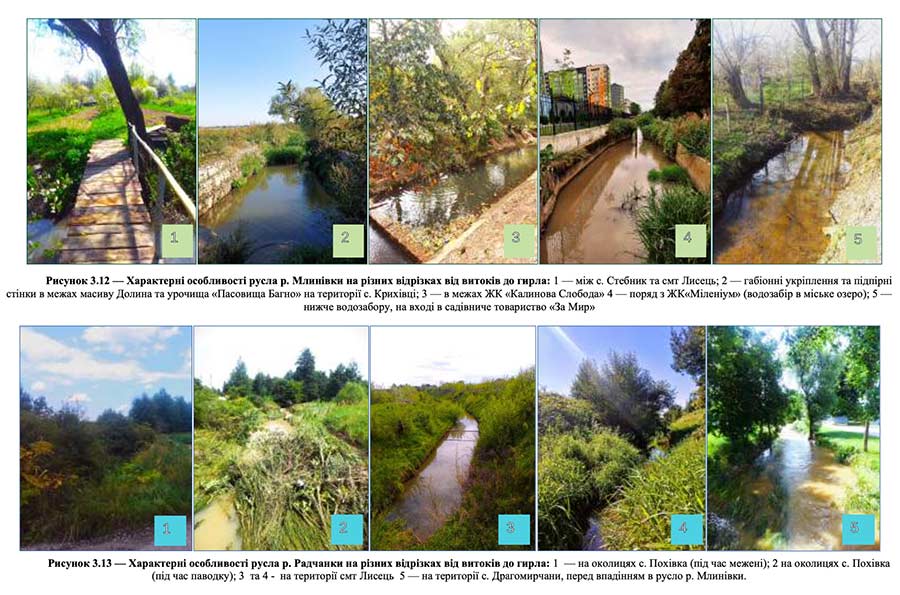
Images from the Comprehensive Environmental Assessment report
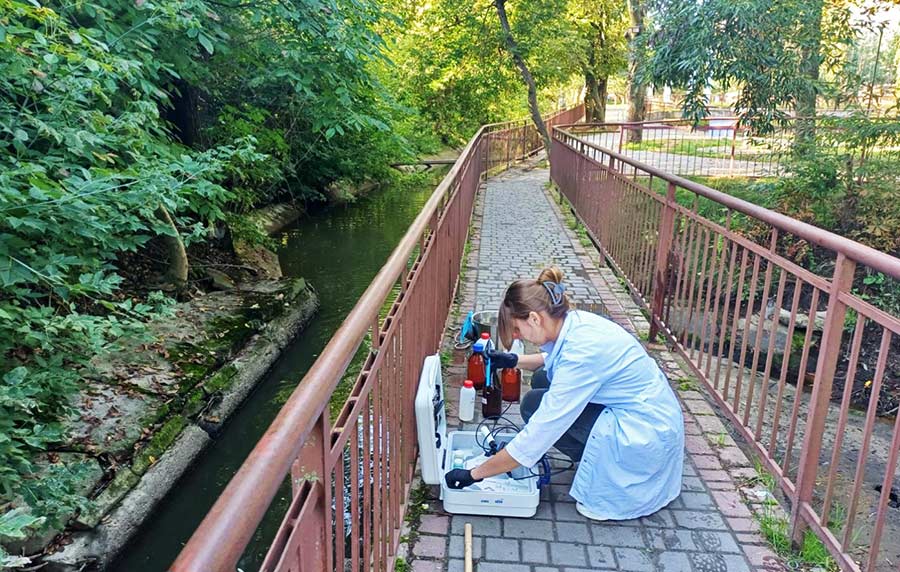
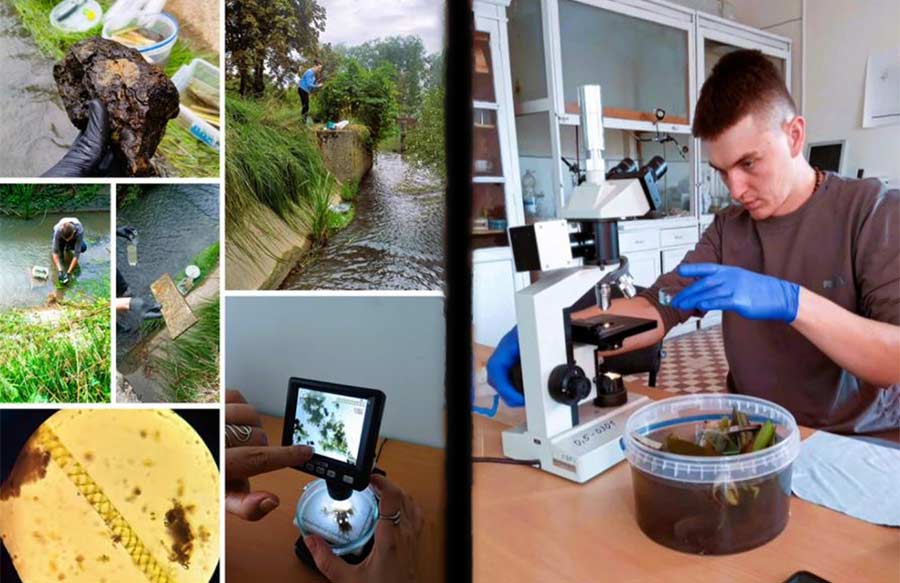
As part of the project, the NGO Innovative University conducted a series of field trips and laboratory analyses, worked with maps and archival data, requested information from various government institutions, and ultimately prepared a Comprehensive Environmental Assessment of the Mlynivka and Radchanka rivers.
The Comprehensive Environmental Assessment Repocontains detailed information on the condition of both rivers across a range of parameters: hydrogeological conditions; land use characteristics within the river’s catchment areas; habitats and natural landscapes of the river basin; sources of pollution; results of laboratory analyses by groups of indicators; and others.
The authors of the study also provide recommendations in the report, including the following:
- expanding recreational areas by developing ecological trails along the Radchanka River (from the village of Drahomirchany to the wetlands in the Mochary tract, which can be laid along the river’s protective riparian zone, through agricultural land and forest areas) and the Mlynivka (Stebnytska) River (from the city lake to the village of Stebnyk);
- expansion of the riparian zones along the river corridors of the two rivers and appropriate landscape planning and greening using local self-seeding tree and shrub species or restoration of grass cover;
- restoration of the role of natural open springs that previously had, or still have, surface runoff into the Mlynivka river.
The project coordinators presented the research results to the community and prepared a formal request to government institutions to amend the Water Cadastre and for the inclusion of the Mlynivka and Radchanka rivers in the State Monitoring of surface water bodies.
Another project activity was the training course ‘Small Watercourses: Climate Change Adaptation and Sustainable Development’ held at the Centre for Innovative Development of Ivano-Frankivsk National Technical University of Oil and Gas (IFNTUOG). The training was attended by employees of the City Development and Recreation Centre, as well as students of IFNTUOG and Vasyl Stefanyk Precarpathian National University.
Preparation of the Comprehensive Recovery Programme (CRP) for the Pokrovsk settlement territorial community, including climate change adaptation and mitigation measures up to 2030
Implemented by: NGO Foundation “Regional Center for Economic Research and Business Support” (RCERSB)
The NGO ‘RCERSB’ developed a Comprehensive Recovery Programme (CRP) for the Pokrovsk community (Dnipropetrovsk region). The NGO received support from Ecoaction because it included a climate component in the Programme.
The Comprehensive Recovery Programme is a planning document approved by the Ukrainian government in October 2022, and its scope covers communities affected by Russian aggression. The CRP development procedure does not include a mandatory requirement to take climate change into account, but only mentions that such programmes should contribute to ‘the implementation of modern approaches and development practices for the … communities,’ including ‘environmental sustainability.’
So far, only a small number of Ukrainian communities have developed CRPs, and in the case of the Pokrovsk community, it was the first such programme in the Dnipropetrovsk region. As explained by the RCERSB, the Comprehensive Recovery Programme for the Pokrovsk Community is a document that sets out an action plan to achieve a new qualitative state of the territorial community – a state of restored post-war functionality based on the principle of ‘build back better’.
The organisation visualised the stages of work on the CRP as follows:
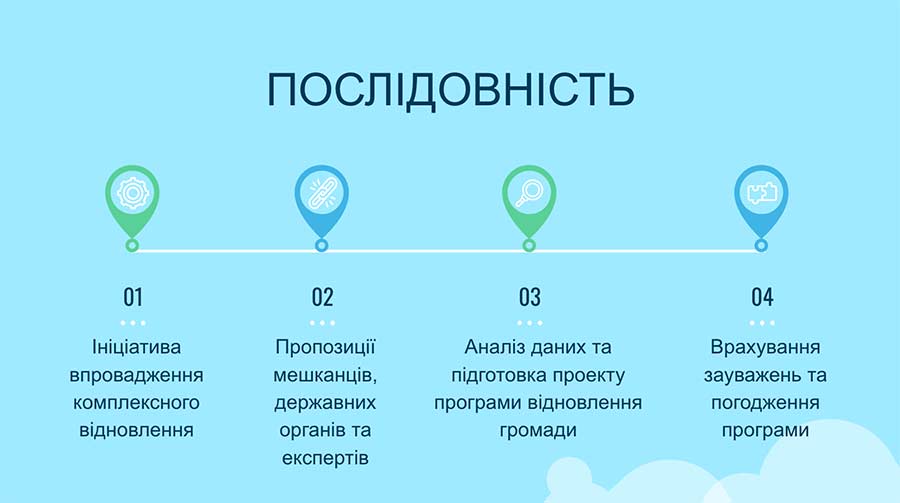
With regard to the climate component, the Programme includes:
- an overall environmental assessment;
- a climate change adaptation strategy for the Pokrovsk Settlement Territorial Community (STC);
- general and sectoral measures aimed at adapting the Pokrovsk STC to climate change;
- the climate change adaptation project ‘Parks of the Pokrovsk Community’;
- climate change adaptation project ‘Water for the Pokrovsk Community’.
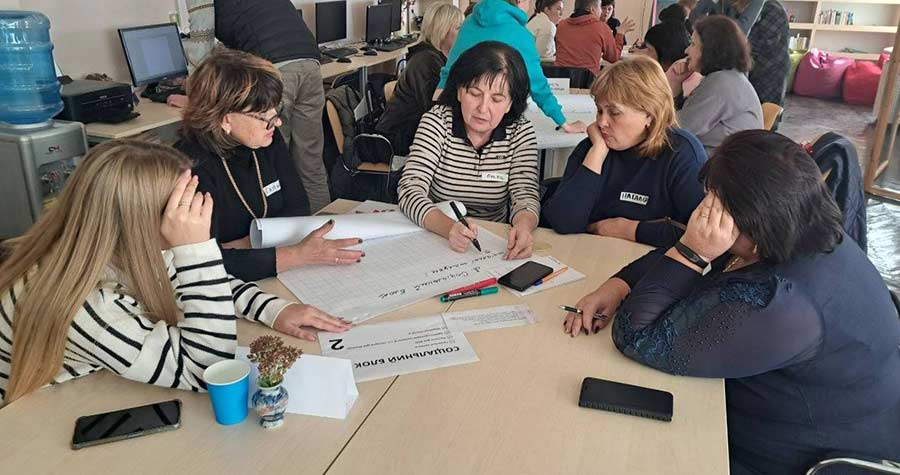
Public discussion of the programme
Experts prepared the CRP based on the results of a survey of local residents, including activists, experts, and representatives of municipal enterprises and businesses.
The climate component of the document was developed by experts from the National University of Kyiv-Mohyla Academy, with whom the RCERSB has been cooperating for a long time.
Climate Change Vulnerability Assessment of the Dolynska community (Kirovohrad Oblast) and recommendations on adaptation and green recovery measures
Implemented by: NGO ‘Centre for International Cooperation and Project Implementation’ (CICPI)
With the support of Ecoaction, the CICPI team had the opportunity to work with a motivated community that is ready to take action in pursuit of meaningful changes. At the beginning of the project, a working group was established under the Dolynska City Council, which met regularly to discuss solutions aimed at strengthening the community’s climate resilience.
In preparing the Community Vulnerability Assessment, project experts conducted an online survey entitled ‘Do you notice climate change in your life?’ A total of 256 community residents took part in the survey, including both urban and rural inhabitants.
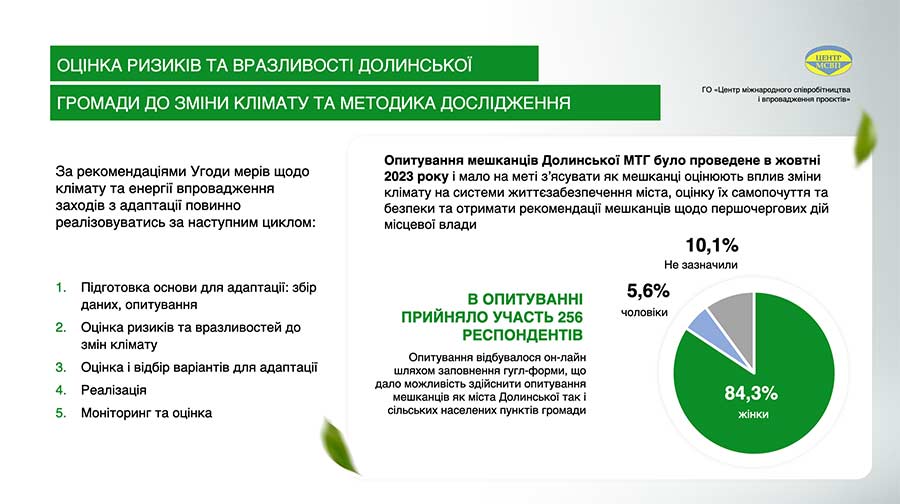
Slide from the presentation of the project results
In addition, for the Vulnerability Assessment, the CICPI team analysed data on changes in weather conditions between 1946 and 2022, provided by the Dolynska meteorological station.
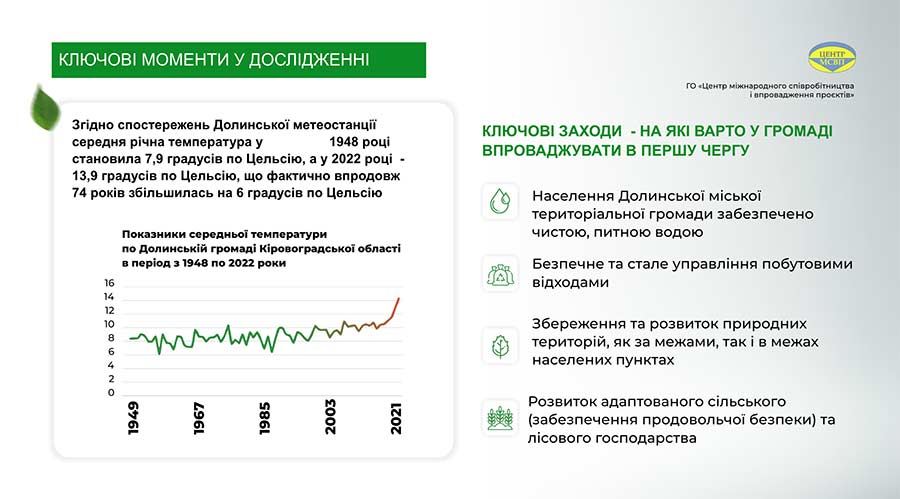
The project included an educational component. The project team held a series of online and offline lectures on climate change and the impact of war on the environment, reaching about 700 school students from all 12 educational institutions in the community.
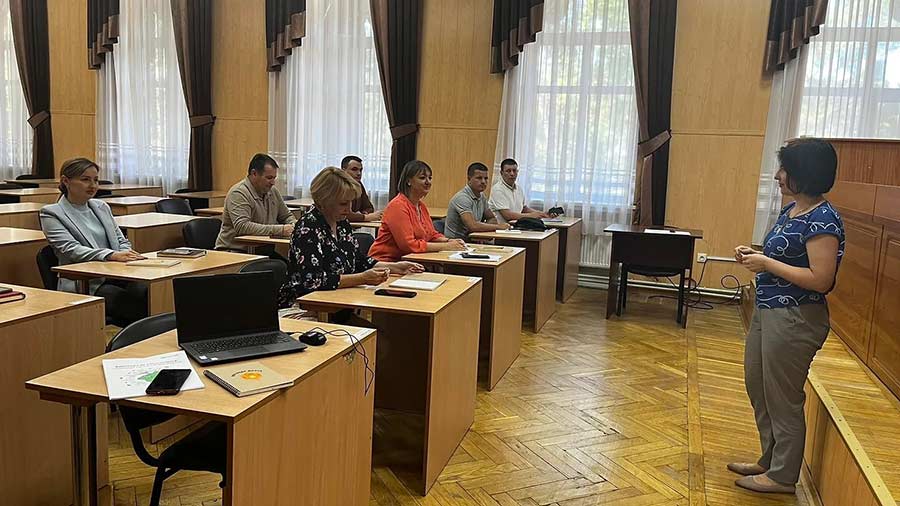
At the end of January 2023, the NGO presented its findings to the community, including the Climate Change Vulnerability Assessment of the Dolynska community and recommendations for adaptation and green recovery measures. Among the measures proposed by the project experts were:
- balanced development of green areas in the community’s settlements;
- increasing the adaptive capacity of forest ecosystems to climate change and anthropogenic impact;
- increasing the adaptive capacity of agriculture to climate change;
- restoration of the hydrological regime and improvement of the sanitary condition of rivers and water bodies in the Dolynska MTC territory, as well as modernisation of wastewater treatment facilities and drainage systems;
- safe and sustainable management of household waste;
- establish the position of climate change adaptation coordinator and energy manager in the local government.
The NGO reported that the project helped establish close cooperation with the city council and that they plan to continue working together not only on adaptation projects, but also on waste management, water supply, and energy efficiency.
Development of recommendations for the ‘Comprehensive Restoration Programme of the Bucha City Territorial Community’, taking into account the principles of green recovery
Implemented by: NGO ‘I am Buchanets’ (ECO BUCHA)
The project of the public organisation ‘I am a Buchanets’ covered a number of activities, one of the key ones being the analysis of public-use wells and drinking pumping stations (buvets).
Wells and buvets were selected as a focus because they were actively used by community residents during the russian occupation in March 2022 and in the early days after de-occupation, and a part of the population continues to rely on them on a regular basis. The project team sought to identify wells with poor water quality and inform the community about this. Wells that proved to have good water quality are planned to be upgraded in cooperation with the Buchaservice municipal enterprise in accordance with the requirements of the State Sanitary and Epidemiological Norms, including their sanitisation and disinfection.
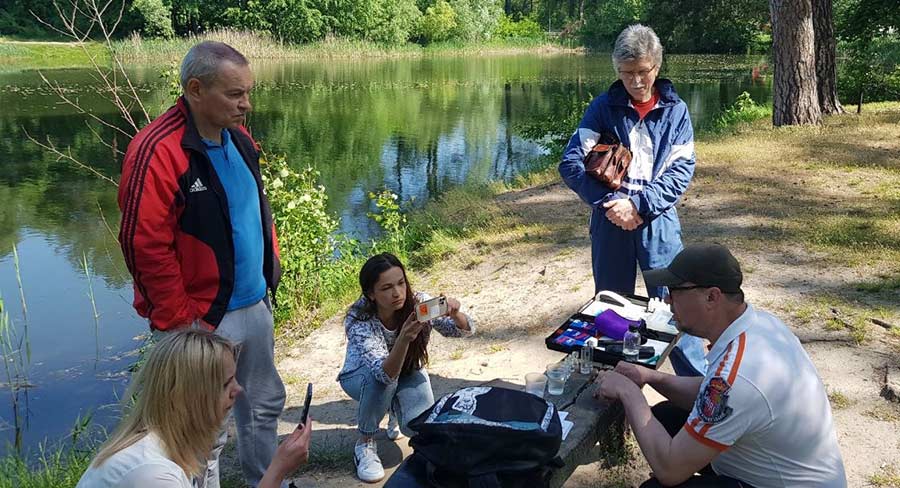
The surveyed sites, together with descriptions of the water quality analysis results, were plotted on an interactive map. For each site, the map description includes information on the overall condition of the well’s external and internal structures; whether there is protection against rainwater, groundwater, and sewage; as well as the results of rapid analysis of a number of indicators conducted using the iDip Exact 570 photometer.
The published map has become very popular within the community and has attracted a significant number of views.
One of the NGO’s goals in this project was to draw the attention of the local authorities to the need for green projects and environmental protection in the community. The NGO itself initiated meetings with representatives of the city council, municipal enterprises (e.g., ‘Buchazelenbud’, ‘Buchaservice’), the chief architect, etc. The project team also prepared and submitted proposals to the Comprehensive Restoration Programme of the Bucha Municipal Territorial Community.
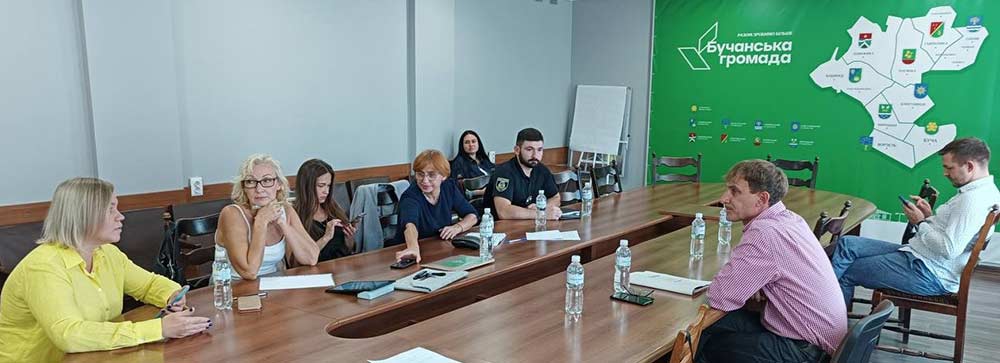
Meeting of the project team with representatives of the Bucha City Council
During the project, ECO BUCHA continued to implement activities that bring local residents together and create opportunities for civic education.
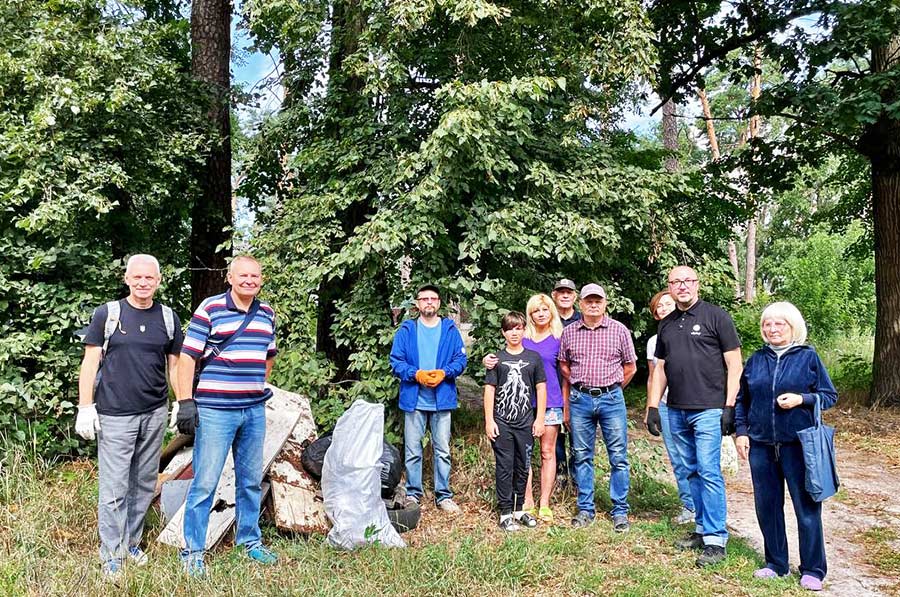
Bucha residents cleaned up a land near the former clinic on Shevchenko Street, took part in training on digitising trees using the iTree tool, and documented trees along the New Highway in Bucha. They organised open educational events on the topics of air pollution and household waste sorting.
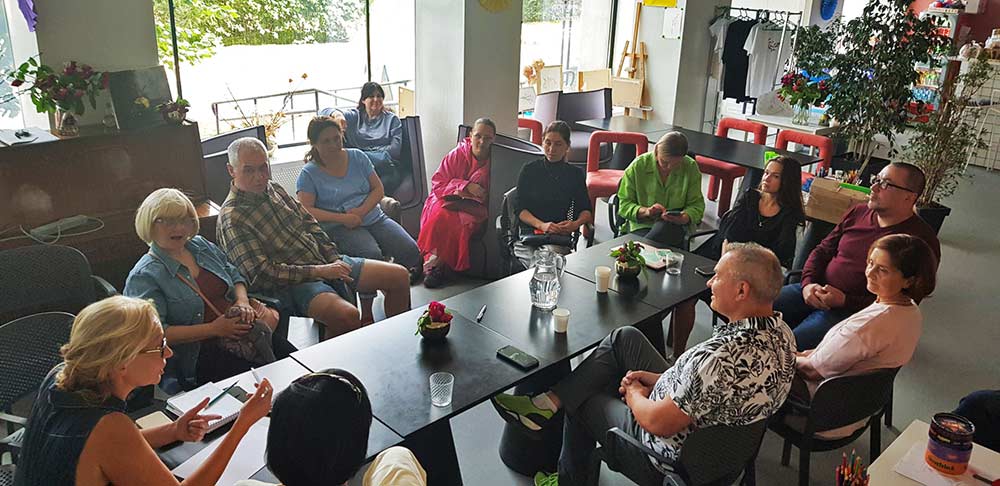
Meeting of community residents interested in environmental protection
The NGO also supported young people in creating a video about environmental protection in the Bucha community.
«We should not underestimate ourselves and our collective civic impact. Together, we are defending ourselves against such a formidable adversary – can we not also hold the line to protect the nature around us?» – the ECO BUCHA team believes.
Preservation of the Irpin River floodplain as an important element of Irpin’s green restoration
Implemented by: NGO Ukrainian Ecological Club (UEC) ‘Green Wave’
Within the project, Green Wave, together with the residents of Irpin, advocated for the establishment of a local landscape reserve on the territory of the Irpin River floodplain. The area proposed for the reserve covers more than 300 hectares and is part of the European Emerald Network. It includes the Irpin River water area, the riparian protective zone, and part of the Irpin River floodplain.
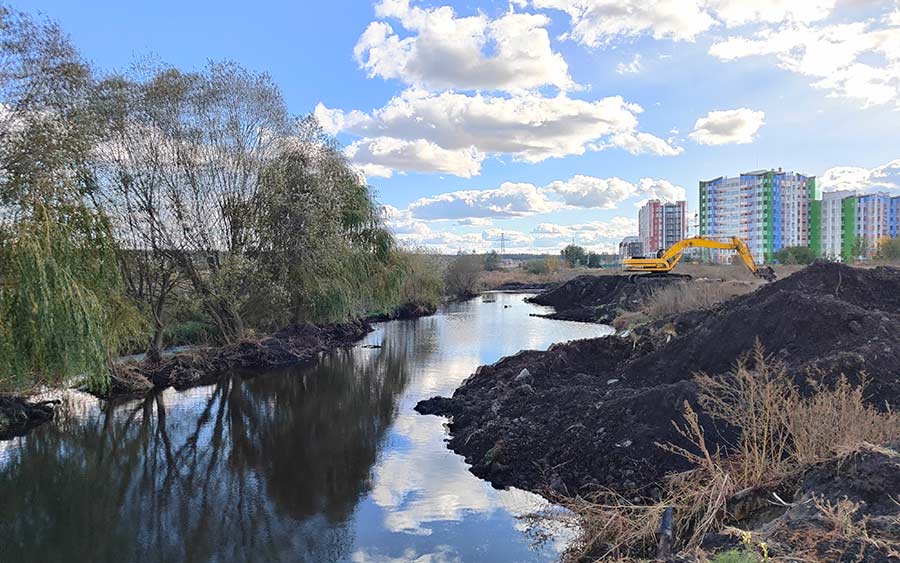 The Irpin River floodplain threatened by construction
The NGO organised an expedition to the Irpin River floodplain together with environmentalists and Taras Vyazovchenko, a member of the Irpin City Council, to study the situation in this area.
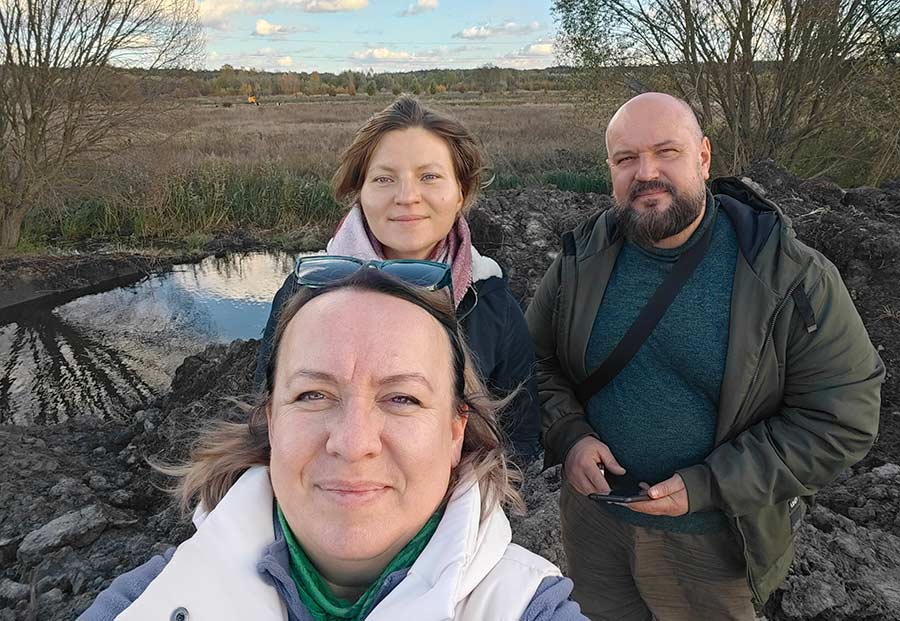
Expedition to the floodplain
Overall, Green Wave held a significant number of expert consultations — with climatologists, biologists, lawyers, and colleagues from other civil society organisations — ensuring that its appeals to authorities were grounded in scientific justification. For example, the proposal to create the local landscape reserve ‘Irpin River Floodplain,’ which the project team presented at a session of the Irpin City Council in late November 2023. In mid-December 2023, Green Wave submitted a formal request to the Kyiv Regional Military Administration to create the reserve (with a detailed description for this initiative).
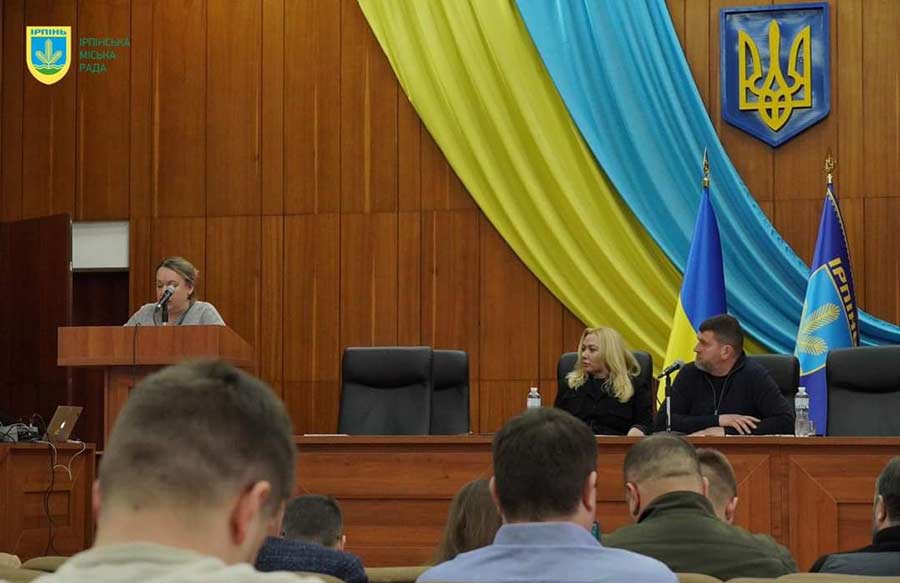
Speech at a session of the Irpin City Council
As part of the information campaign, on 30 November 2023, the project coordinators held an online conference entitled ‘Preserving the Irpin River Floodplain as a Climate Change Adaptation Measure’ with the participation of a number of experts on climate change adaptation, as well as protection and conservation of natural areas.
In addition, Green Wave prepared a guide entitled ‘Methodological Recommendations for Designation of Nature Reserves, Natural Monuments, and Protected Areas to improve the Development of Ukraine’s Ecological Network.’ This guide was presented at a meeting with the Irpin community in December 2023.
Promoting the Green Deal in the city as a vector for green urban development through interactive events for young people
Implemented by: NGO “Vin-Resource”
This project aimed to promote the Green Deal among young people in Vinnytsia. It refers both to the European Green Deal (EGD) and to the Vinnytsia Green Deal, which is based on the principles of the EGD. In January 2022, Vinnytsia became the first city in Ukraine to decide to join the European Green Deal by reforming its policies and decision-making in accordance with its principles.
To introduce Vinnytsia residents — and young people in particular — to the Green Deal and to demonstrate how they can get involved in its implementation, the NGO Vin-Resource organised a series of events as part of a project supported by Ecoaction.
The project kicked off with the Green Deal Forum, which aimed to explain what the Green Deal is and who makes green decisions at the local level. The speakers at the Forum included representatives of local authorities, civil society organisations, and experts working on topics related to the Green Deal.
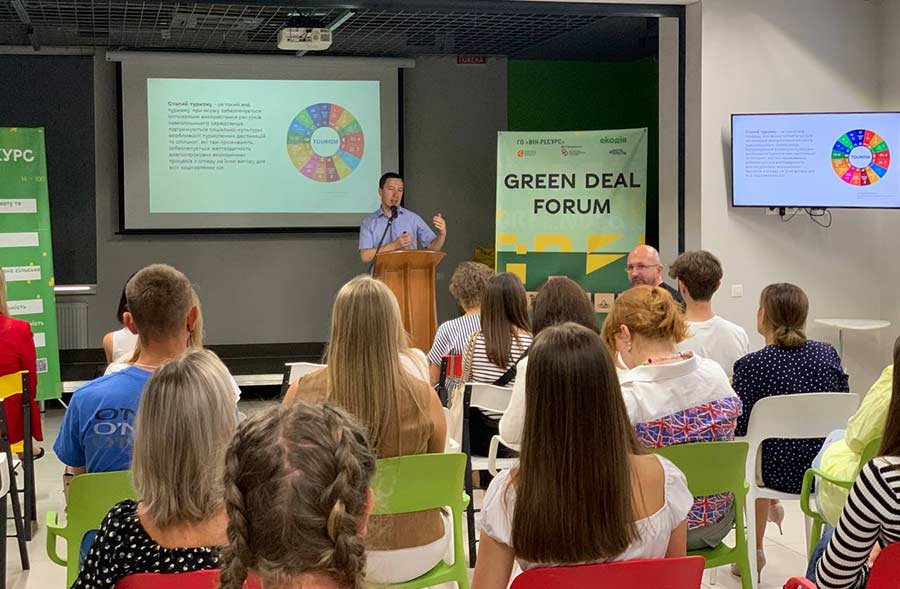
Green Deal Forum
A series of events introduced participants to the environment and recreational opportunities of the community:
- birdwatching on the Brihantyna Peninsula with an ornithologist;
- a cycling tour to the Desna-Stara Huta National Nature Park (with a route of over 30 km);
- a rafting tour on the Southern Bug River for the youngest residents of the Vinnytsia community, accompanied by a video report of the rafting tour.
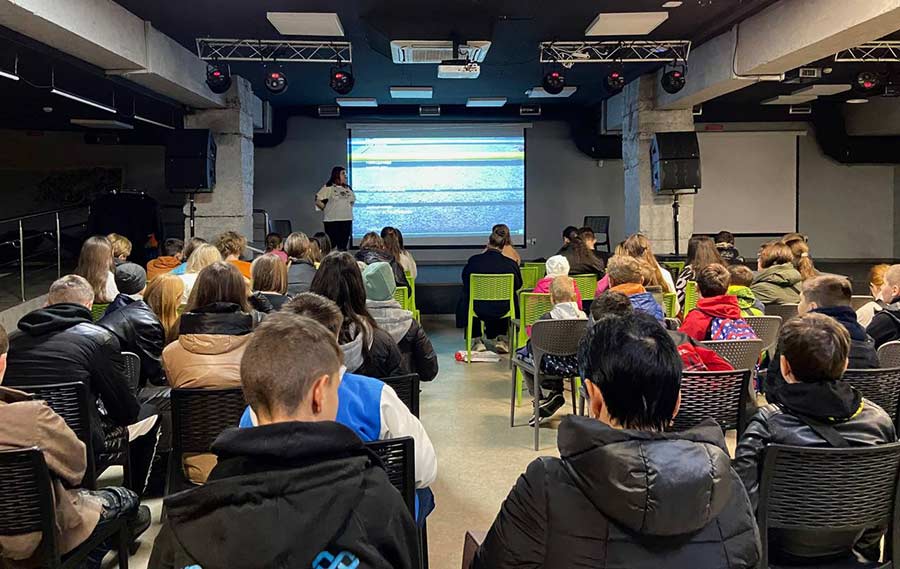 Green Film Day
Vin-Resource also managed to gather more than 50 city residents for Green Cinema Day. Participants watched and discussed the films ‘Zero Impact’, ‘Out of Fashion’, and ‘And Every River’.
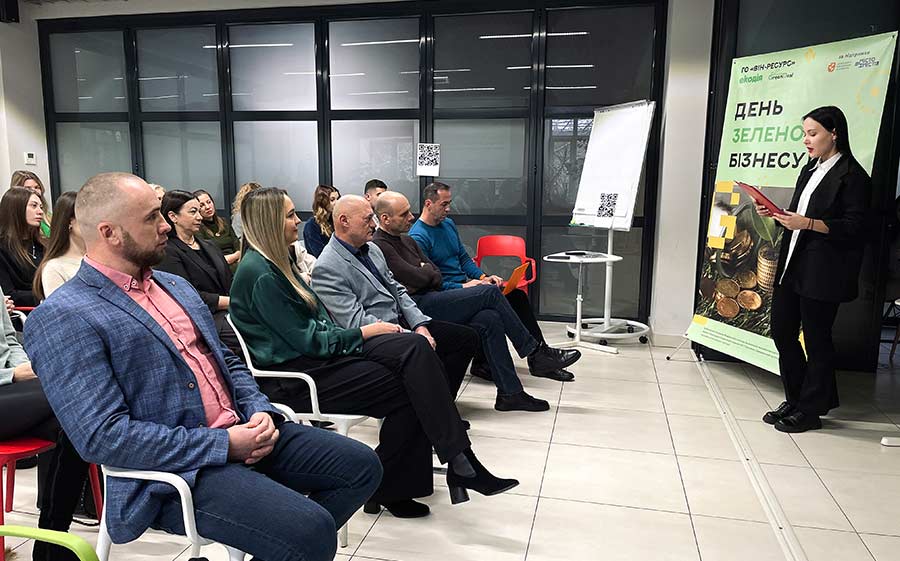
Green Business Day
The final event of the project was the Green Business Day forum, where scientists, entrepreneurs, and all interested parties discussed best practices for transitioning to a green economy, developing renewable energy sources, and other useful initiatives.
Translated from Ukrainian by Ecoaction volunteer Polina Tsybulska.
Projects aimed at developing Ukrainian cities and communities in line with the principles of green recovery were implemented with the financial support of the German Federal Ministry for Economic Affairs and Climate Action as part of the International Climate Initiative (IKI) project ‘Strengthening civil society in the implementation of national climate policy’. The views expressed in this publication are those of the authors and do not necessarily reflect the official opinion of the donors.
